
How Should Your Commute Shape Where You Live in Louisville?
By Tim Hollinden, Broker Associate | The Hollinden Team at eXp Realty
Quick Answer
Start with where you'll actually work and when you'll actually drive, then work outward from there.
In Louisville, the loops, the interstates, and the river matter more than distance on a map. Two homes the same number of miles from your office can mean very different mornings, depending on which highway you're stuck with and whether you're crossing a bridge. Before you fall for a house, drive the commute at the real hour, factor in any bridge tolls, and be honest about how many days a week you'll make the trip.
What You'll Learn
- Why the map app can make a Louisville commute look easier than it is.
- How the Watterson, the Gene Snyder, and the interstates shape daily drives.
- Where some of Louisville's big employment areas sit, and why that matters.
- What the river crossings and tolls mean if you're looking at Southern Indiana.
- How shift work, hybrid schedules, and two commuters change the answer.
- How to test a commute before you buy.
Tim's Take
If I could give relocating buyers only one piece of advice, it would be this: drive the commute before you fall in love with a kitchen.
I've watched plenty of people find a house they loved, check the drive on a map app, and call it good. Then they made that drive at 7:45 on a Tuesday morning and discovered it was a very different trip.
The commute usually does more to narrow down where you should live than anything else, and it's the one thing you can't renovate later. In Moving to Louisville: What to Know Before You Relocate it's the first question I ask, and this article goes deeper into why.
Why Distance on a Map Can Fool You
Louisville isn't a grid. It's a set of loops and spokes with a river along one side, and that shape matters.
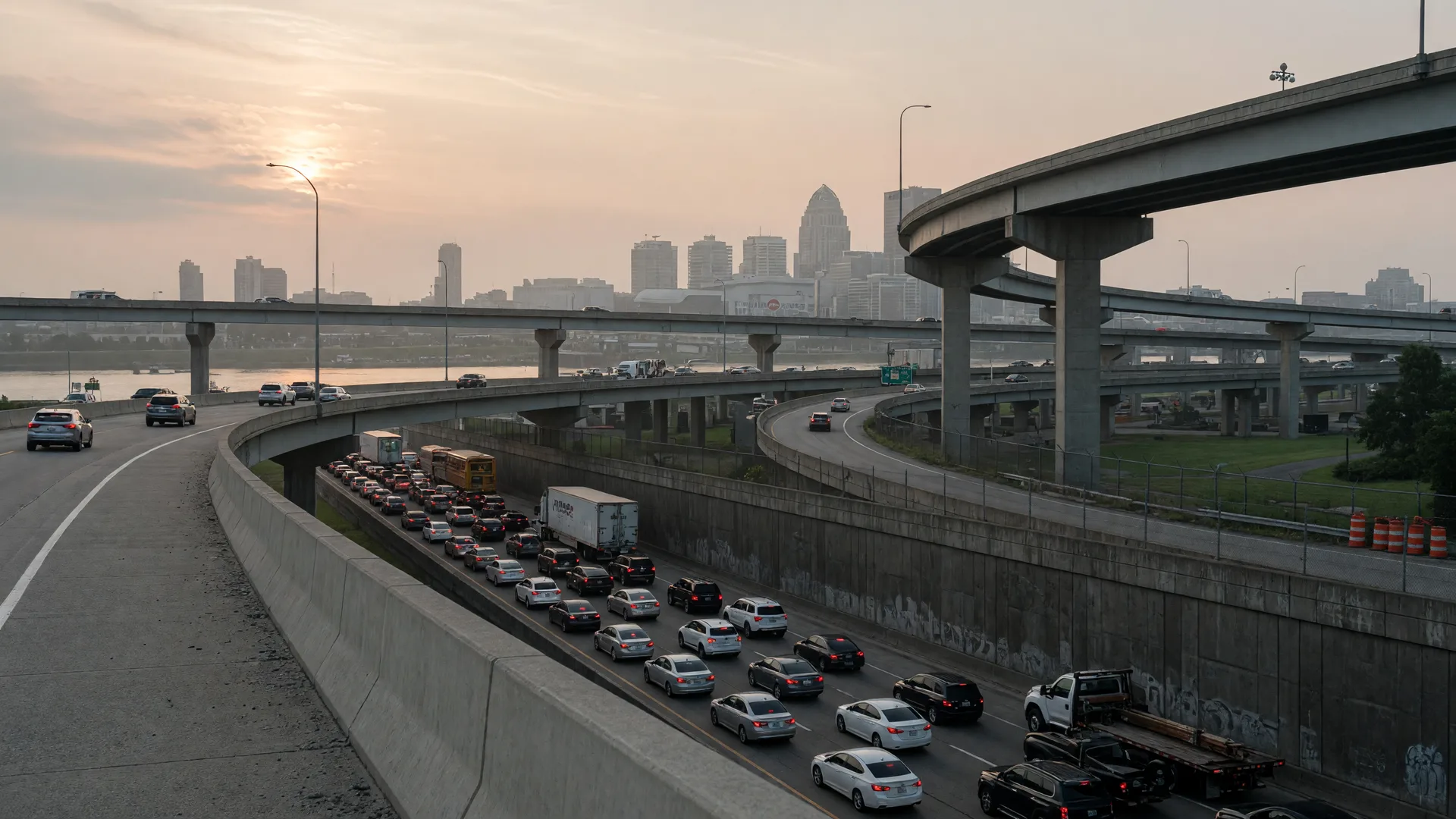
The Watterson Expressway (I-264) is the inner loop. The Gene Snyder Freeway (I-265) swings farther out through the southern and eastern parts of Jefferson County. I-64, I-65, and I-71 run through the middle, and they meet downtown at the interchange locals still call Spaghetti Junction.
What that means in practice is simple. Your drive depends less on how far away work is and more on which roads connect the two. A home that sits right off the Snyder may get you to an east-end job faster than a home that's closer as the crow flies but has to fight its way across town. And a short drive that runs straight through downtown at rush hour can be longer than a longer drive that never goes near it.
Here's the thing I'd pay attention to: predictability. Personally, I'd take a steady 25-minute drive over one that's 15 minutes on a good day and 40 on a bad one. You'll feel that difference every week.
Know Where the Work Actually Is
Louisville's jobs aren't all downtown, and that surprises some newcomers. Downtown has major office employers and a large medical center. The area around the airport, south of downtown, is home to UPS Worldport and Ford's Louisville Assembly Plant. Ford's Kentucky Truck Plant sits in the northeast part of the county, near the Gene Snyder. There are office parks and industrial areas scattered around the metro too.
So the question isn't "what's a good commute from this neighborhood?" It's "what's a good commute from this neighborhood to your job?" A home that makes perfect sense for someone working downtown can be a long haul for someone working near the airport, and the other way around.
The River Changes the Math
If you're considering Southern Indiana (Jeffersonville, New Albany, Clarksville), the bridges become part of your daily life.
Three of the Ohio River crossings carry tolls: the Kennedy and Lincoln bridges on I-65 downtown, and the Lewis and Clark Bridge in the east end. Two don't: the Sherman Minton Bridge on I-64 and the Clark Memorial Bridge downtown. The tolled crossings are electronic and billed through RiverLink, which publishes current rates and its frequent-user discount. Rates adjust over time, so check RiverLink directly rather than relying on a number you heard from a friend.
Twice a day, five days a week, those tolls add up. The free bridges are real options, but depending on where you're headed, they can add time to the drive. I'd weigh both when you compare a home across the river with one on the Kentucky side. Taxes also work differently when you live in one state and work in the other, so that's a question for a tax professional before you decide.
Your Schedule Matters as Much as Your Address
A lot of commute advice assumes everyone drives at 8 a.m. and 5 p.m. Plenty of people don't.
- Shift work. Many jobs at the plants and around the airport run on shifts. If you're driving when everyone else isn't, rush hour may barely touch you, and a location that looks inconvenient on paper can work just fine.
- Hybrid schedules. If you're in the office two days a week, a longer drive may be a perfectly reasonable trade for more house or more land. If you're in five days a week, I'd think harder about it.
- Two commuters. When two people work in different directions, the right house usually isn't perfect for either drive. It's fair to both. I'd map both commutes before picking a single neighborhood.
- Other daily trips. If your mornings include a school drop-off or a stop somewhere else, drive that route too. Your real commute may include more than the drive from home to work.
How you get there matters too. My father-in-law was a stockbroker for years. He worked downtown and lived in the East End, and depending on traffic, that could be a 40-minute trip. It didn't bother him much, because he rode the TARC bus. He used the ride to catch up on the Wall Street Journal and his other reading, so to him that wasn't 40 minutes wasted behind the wheel.
That's why I don't think there's one right or wrong commute for everybody. A trip that would wear one person out might suit someone else just fine. What matters is how the commute fits your life.
If you plan to use public transit, TARC is the source for current routes and schedules. TARC buses also cross the river without tolls.
Trading Drive Time for House
This is a real trade, and I won't pretend there's one right answer. Driving a little farther can buy more space, a bigger lot, or a newer home. Much of Louisville's newer construction sits farther out, where the land is. I cover that trade in Should I Build or Buy a Home in Louisville?
I'd just ask you to do the math honestly. Twenty extra minutes each way may not sound like much until you multiply it by ten trips a week. If you're the one driving, over a year that's a lot of your life spent behind the wheel. For some people that's worth it. For others, once they see it that way, the smaller house closer in suddenly looks a lot better. And as my father-in-law's bus rides show, the same minutes can feel very different depending on how you travel and what you do with them.
Fuel, tolls, and wear on the car belong in the budget too, right alongside the mortgage. If you'll be driving downtown every workday, parking can be a meaningful monthly expense of its own, so count that as well. For a practical way to think about the total picture, see How Much House Can I Really Afford? And the commute is only part of everything else that goes into cost of living, which I walk through in my guide Cost of Living in Louisville.
How I'd Test a Commute Before You Buy
Once you have a few homes or neighborhoods in mind, test the drive the way you'll actually live it:
- Drive it at the real hour, in both directions, ideally on a weekday.
- If you'll cross the river, drive it both ways: the tolled route and the free one.
- If there are two commuters, drive both commutes.
- Check the weekend trips you'll make often too, like groceries, church, the gym, or the airport.
Driving the commute is one thing I'd strongly encourage you to do yourself, even if it's just once on your first trip. When you can't be here, I can tour homes in person on your behalf and send video and photo walkthroughs. The drive, though, is yours to feel.
When you're ready to turn this into a real list of places to look, How to Choose a Louisville Neighborhood When You're Relocating walks through building your shortlist. And for the practical order of the trip itself, here's a guide to planning your house-hunting trip.
Frequently Asked Questions
How bad is traffic in Louisville?
In my experience, many buyers relocating from larger metros find Louisville commutes more manageable than what they're used to. But your experience can change dramatically depending on your route and the time you drive it. That's why I'd rather have you drive your actual commute than give you a citywide answer about whether Louisville traffic is "bad."
Which Louisville bridges have tolls?
The Kennedy and Lincoln bridges on I-65 downtown and the Lewis and Clark Bridge in the east end are tolled through RiverLink. The Sherman Minton Bridge on I-64 and the Clark Memorial Bridge downtown are toll-free. RiverLink publishes current rates, which adjust over time.
Is it worth living in Southern Indiana if I work in Louisville?
It can be, and plenty of people do it. It depends on where in Louisville you work, which bridge makes sense for that trip, what the tolls add up to over a year, and how state and local taxes apply to your situation. For the tax part, I'd confirm with a tax professional.
How long is the commute from Oldham County to Louisville?
It depends on where in Oldham County you live, where in Louisville you work, and when you drive. I-71 is the main route for many of those commutes. Rather than trusting an average, drive your actual route at your actual hour.
Does Louisville have public transit?
Yes. TARC, the Transit Authority of River City, runs Louisville's bus system, and its buses cross the river toll-free. TARC's current routes and schedules are the source for whether transit fits your commute.
Should I live closer to work or get more house farther out?
There's no universal right answer. I'd do the math on the extra drive time over a full year, add in the extra costs, and be honest about how many days a week you'll make the trip. Some people find the trade is clearly worth it. Others realize they'd rather have the smaller house and the shorter drive.
Bottom Line
In Louisville, the right place to live usually starts with the drive, not the house. The roads, the river, your job's location, and your actual schedule matter more than straight-line distance. Drive it at the real hour, count the tolls and the time honestly, and you'll narrow your search to places that fit your daily life.
Call To Action
If you're relocating to Louisville and want to talk through where your commute points you before you start touring homes, I'd be happy to help. No pressure, no obligation. Just an honest conversation. Call 502-429-3866.
About Tim Hollinden
Tim Hollinden is a former home builder and Broker Associate with The Hollinden Team at eXp Realty. For more than 24 years, he has completed over 1,650 real estate transactions throughout Greater Louisville by combining builder knowledge with practical, evidence-based real estate advice.