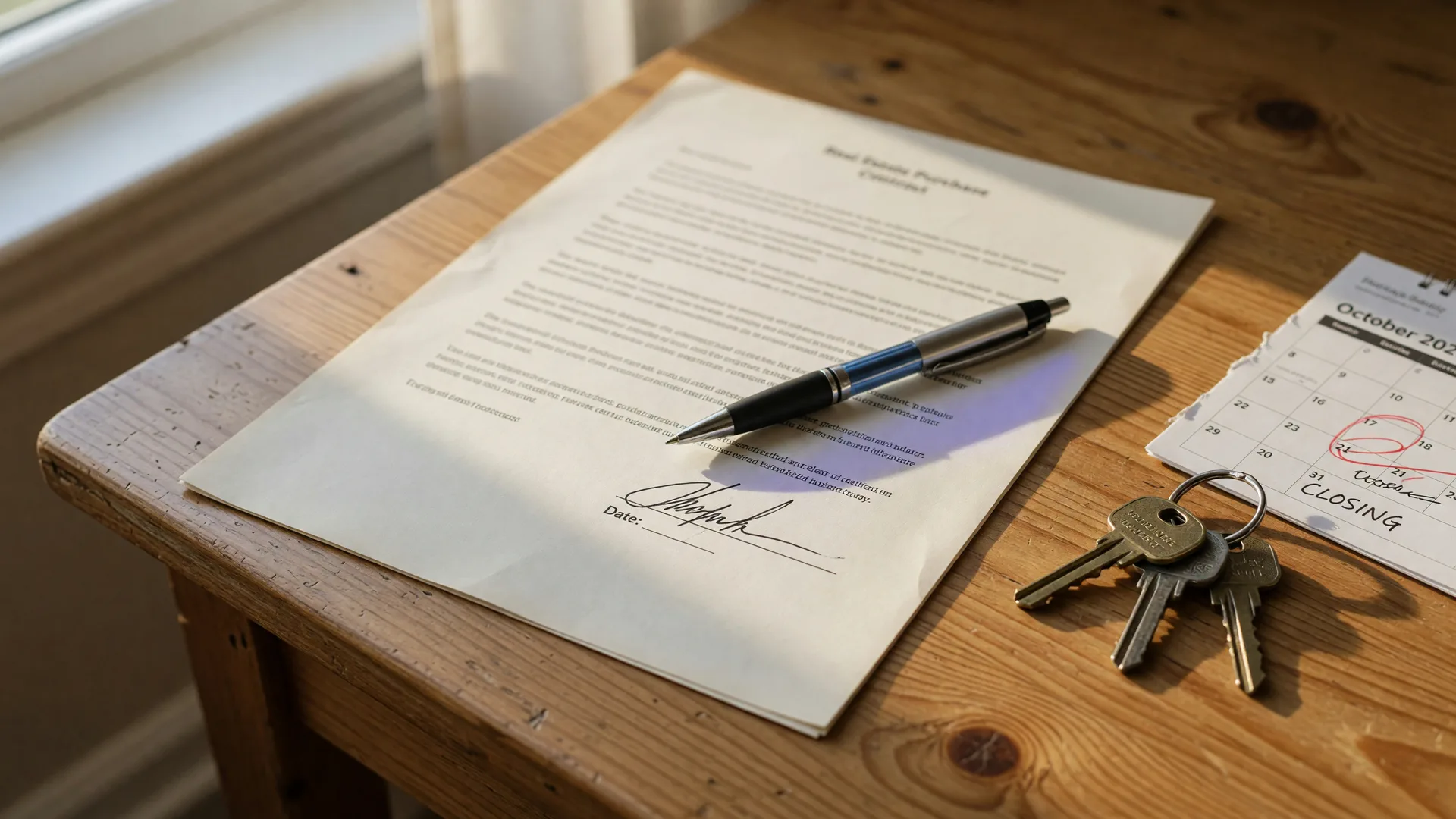

What Should I Never Do Before Closing on a House?

By Tim Hollinden, Broker Associate | The Hollinden Team at eXp Realty
Quick Answer
Most of what puts a closing at risk in its final stretch isn't complicated — it's a short list of specific mistakes, repeated often enough that I can predict them before they happen. Some involve money, some involve paperwork, and some are just timing mistakes that feel harmless in the moment. Here's the list I'd hand any buyer the day they go under contract.
What You'll Learn
- The financial mistakes that can quietly jeopardize your loan
- The paperwork and timing mistakes that have nothing to do with money
- Why you shouldn't rely on anything that wasn't put in writing
- The logistics mistakes that turn closing week into a scramble
Tim's Take
I've written about what happens between contract and closing and how to actively protect your transaction during that stretch. This one's the quick-reference version — the specific list I'd hand someone if they only had five minutes before they needed to know what not to do. It's not a substitute for understanding the full process. It's the list worth keeping somewhere you'll actually see it.
The List
1. Don't make a major purchase on credit, or open a new credit account. This is one of the easiest ways buyers can accidentally complicate their own financing. I cover exactly why in detail in how to protect your home purchase before closing — the short version is that anything affecting your credit or debt-to-income ratio can trigger a new round of questions from your lender, and every question costs time you may not have.
2. Don't change jobs if you can possibly avoid it. Even a good change — a promotion, a better offer — can complicate your loan file mid-transaction. If it's unavoidable, tell your lender immediately, not after the fact.
3. Don't let your inspection deadline pass without deciding. Your inspection period is a real deadline, not a soft suggestion. Letting it lapse without requesting repairs, asking for a credit, or making a decision can waive rights you meant to keep, depending on your contract.
4. Don't skip reading your Closing Disclosure line by line. If your loan uses a Closing Disclosure, don't skim it when your lender provides it before closing. Check that your loan terms, your actual cash needed at closing, the fees and charges listed, and your escrow and tax figures all match what you expected, along with any credits you were promised. If something doesn't match, that's a conversation to have with your lender before signing day, not during it.
5. Don't treat the final walkthrough as a formality. It exists for a reason: confirming the home is in the condition you agreed to buy it in, and that any promised repairs actually happened. Show up, look carefully, and say something immediately if anything's off.
6. Don't wire funds without verifying instructions by phone first. This is worth repeating even though I've said it elsewhere: wire fraud targeting real estate closings is real, and a convincing-looking email is not verification. Call your title company directly, using a number you already know is correct, before you send anything.
7. Don't schedule your movers for closing day itself. Closings occasionally get pushed by a day or two for reasons that have nothing to do with you. Building in even a one or two day buffer between closing and your move can save you from a genuinely stressful scramble.
8. Don't spend or move money you've set aside for closing without talking to your lender first. Even a cash purchase, a transfer between accounts, or paying off another bill with funds you'd earmarked for closing can affect what's actually available when it's time to close, or create a paperwork question your lender has to resolve before they'll sign off. If you're not sure whether moving money affects your file, ask before you do it.
9. Don't rely on anything that wasn't put in writing. If a repair, credit, timeline change, or any other adjustment comes up during the process, make sure it's actually documented before you count on it — a conversation, a text, or something mentioned in passing isn't the same as a signed addendum. This is exactly the kind of detail your agent is already tracking on your behalf; if you're ever unsure whether something was properly formalized, ask them to confirm.
10. Don't assume you're done with your lender just because you've been approved. Final verification can continue right up through closing and funding — lenders often re-check employment, credit, and other details shortly before closing. Keep following your lender's guidance for this entire window, not just up to your initial approval.
Frequently Asked Questions
Is this list the same as what happens if I violate my contract?
Not exactly — some of these are contract issues, and some are just practical mistakes that create stress or risk without necessarily breaking any agreement. Either way, all ten are worth avoiding.
Which of these is most within my control?
The financial ones — new credit, major purchases, moving money without asking — are among the things you have the most direct control over, which makes them worth extra attention. I go into that specifically in how to protect your home purchase before closing.
What if I've already made one of these mistakes?
Tell your agent and lender immediately. Almost everything on this list is more manageable the earlier it's addressed, and much harder to fix the longer it goes unmentioned.
Bottom Line
None of these ten mistakes are complicated, and most buyers who make one of them didn't do it on purpose — they just didn't know it mattered. Keep this list somewhere you'll actually see it between now and closing day, and when in doubt about whether something on it applies to your situation, ask before you act, not after.
If you're getting ready to buy in Louisville and want a straight walkthrough of what to watch for in your own transaction, I'm happy to help. No pressure, no obligation. Call 502-429-3866.
About Tim Hollinden
Tim Hollinden is a former home builder and Broker Associate with The Hollinden Team at eXp Realty, licensed in Kentucky, Indiana, and Alabama. With 24+ years in real estate sales and more than 1,650 real estate transactions, Tim helps buyers and sellers throughout Greater Louisville and Southern Indiana make informed decisions using practical, evidence-based advice. His builder background provides added insight into construction, condition, improvements and value, while nearly two decades as a tech-company CEO shaped the systems-driven marketing he uses today. Tim is also a three-time eXp ICON Agent, an early A.I. Certified Agent™, and holds Zillow's Best of Zillow recognition.
— Tim