
Why Didn't My Neighbor's Home Sell?
By Tim Hollinden, Broker Associate | The Hollinden Team at eXp Realty
Quick Answer
When a home in your neighborhood fails to sell, most people assume it was overpriced. Sometimes that's true. But over the years I've seen plenty of homes that were priced reasonably — and still didn't sell.
Pricing is usually the biggest factor — but it's rarely the only factor.
Understanding why your neighbor's home didn't sell matters because if you're planning to list your own home, you're about to enter the same market, compete for the same buyers, and face some of the same risks. The lessons are sitting right there at the end of your street — if you know how to read them.
What You'll Learn
- The most common reasons homes fail to sell in Louisville
- Why overpricing is only part of the story
- Why the battle is usually won or lost online before buyers ever schedule a showing
- What expired listings can teach you before you list your own home
- How to avoid the same mistakes when you sell
Tim's Take
I've spent a significant portion of my career working with sellers whose homes didn't sell with someone else.
Over 24 years, a large portion of my listing inventory has come from two categories: expired listings and withdrawn listings. Homes that went on the market, didn't sell, and came off — for one reason or another.
When I sit down with those sellers, the first thing I try to do is understand what actually happened. Not what they think happened. What the market record shows happened.
Because the market leaves clues. Days on market. Showing history. Price reduction timeline. Feedback from buyers who came through and didn't make an offer.
Most of the time, when I trace it back, there are one or two specific things that derailed what could have been a successful sale. And in most cases, those things were preventable.
Here's what I've learned from those conversations — and from watching homes succeed and fail across Louisville, Oldham County, Lake Forest, Prospect, Norton Commons, Jeffersontown, and every other corner of this market for more than two decades.
Reason 1 — The Price Was Wrong From the Start
Let's start here because it is the most common reason, and it deserves a direct conversation.
When a home is overpriced, buyers notice immediately. Not because they're experts in market analysis — because they've been shopping. They've seen what else is available at that price. And when your neighbor's home showed up at a number that didn't match what buyers could get elsewhere, they simply kept scrolling. This is also why relying on online home value estimates like the Zestimate can backfire — an algorithm that can't see inside a home or distinguish one subdivision's market from the next may not reflect the price buyers are actually willing to pay.
The first week or two on the market is usually the most critical window a seller gets. Motivated buyers who have been watching the Louisville market are paying attention. They see new listings the day they go live. If the price is right, they schedule showings quickly. If it isn't, they move on to something else — and they don't come back just because the price drops later.
Here's what I've seen happen in practice: a home is listed $25,000 to $40,000 above where the market actually puts its value. The first week passes with very few showings. Maybe one or two from buyers who were curious. No offers. A price reduction comes three or four weeks in. But by then, the buyers who were most likely to love that home have already bought something else.
The home that eventually sells after multiple reductions almost always sells for less than it would have with correct pricing on Day One.
This isn't a theory. It's a pattern I've watched play out more times than I can count, and it's one of the biggest pricing mistakes sellers make.
If you want to understand how pricing actually works — and why the first number matters so much — I covered this in depth in my article on how to price your Louisville home correctly, including a concept I call Pricing on the Bubble.
Reason 2 — The Home Didn't Stand Out Online
This one surprises sellers more than almost anything else.
Today, the battle for a buyer's attention is won or lost on Zillow, Realtor.com, Homes.com, and IDX websites — before a buyer ever schedules a showing, before they drive by the home, and in many cases before they've even told their agent they're interested.
Today, buyers usually decide whether to schedule a showing before they ever leave their couch. If your home doesn't stop them from scrolling, you may never get the opportunity to impress them in person.
Most homeowners assume that listing a home on the MLS is marketing. It isn't — not by itself. The MLS puts your home in a searchable database. What happens after that depends entirely on the quality of the presentation and the reach of the strategy behind it.
When buyers are scrolling through listings online, they make snap decisions based on the first photo. If that photo is dark, poorly framed, or just mediocre, many buyers simply keep scrolling. They never click through to see the price, read the description, or learn anything else about the home.
Professional photography is not optional. It is the difference between a showing and a skip.
But photography is just the entry point. I've seen homes with good photos that still struggled because they lacked a compelling description, had no video, weren't being promoted through targeted digital advertising, and were essentially invisible to buyers who weren't already searching in that exact neighborhood.
Today, effective marketing also means creating listing content that can be understood by search engines and AI-powered answer engines. The better your home is presented digitally, the more opportunities buyers have to discover it — through traditional search, through social media, and increasingly through AI tools that buyers are using to research their options.
Every listing I take receives professional photography, a cinematic video tour, a custom property website built specifically for that home, and targeted digital advertising. That's standard — not an upgrade.
When I take on a listing that didn't sell with a previous agent, one of the first things I do is look at how it was marketed before. More often than not, there's a gap there that explains a significant portion of the problem — regardless of what the price was doing.
Reason 3 — The Home Wasn't Ready
Buyers today are more informed and more selective than they've ever been.
They've done their research. They walk into a home with a clear picture of what they're hoping to find. When reality doesn't match that picture, they move on — often without saying why.
I've seen well-priced, well-marketed homes fail to sell because they weren't prepared properly before going on the market.
Deferred Maintenance
Small things add up. A cracked driveway. A leaky faucet. Peeling paint on the trim. Missing light switch covers. These things cost relatively little to fix, but when buyers see them, they start wondering what else has been neglected. Knowing which improvements to skip is just as important as addressing the ones that matter.
One thing I've noticed from my years as a builder: buyers almost always overestimate the cost of fixing things they can see. A $200 repair in a buyer's mind might feel like a $2,000 problem. Address the visible issues before you list.
Clutter and Personal Presentation
Buyers need to be able to picture themselves in a home. When every surface is covered with personal items and years of accumulated living, that's genuinely hard to do.
Decluttering before listing isn't about making the home look empty. It's about making the space feel like a possibility rather than someone else's story. This is one of the highest-return things a seller can do — and it costs almost nothing except time and effort. For a full breakdown of where decluttering ends and professional staging begins, see our guide on whether staging is worth it for Louisville sellers.
Odor
I say this gently because it's a sensitive topic: buyers notice odor immediately and rarely mention it directly. Pet odor, cooking odor, cigarette smoke — any of these can significantly reduce showing interest and offer activity. It's one of the things sellers are sometimes least aware of because they've lived with it.
Curb Appeal
The first impression a buyer gets happens in the first few seconds after they pull up. If the exterior looks tired or neglected, some buyers have already made up their minds before they walk through the door. Fresh mulch, trimmed shrubs, a clean front door — these things matter more than sellers typically expect.
Reason 4 — The Agent Wasn't the Right Fit
This is the reason sellers are most reluctant to talk about — and the one that probably gets under-acknowledged as a factor in failed listings.
Not every agent approaches selling a home the same way. Some are primarily buyer's agents who take the occasional listing. Some rely almost entirely on the MLS without active marketing.
Occasionally, an agent's desire to win the listing results in a pricing recommendation that the market ultimately doesn't support. The home goes on at an inflated price, showings are sparse, and weeks pass without a clear diagnosis or a revised strategy. Eventually a price reduction is suggested — but by then, significant momentum has been lost.
When that seller calls me, the conversation usually starts with frustration about the price. But as we dig into what happened, it often becomes clear that the combination of the wrong price and a passive marketing approach created a problem that neither one would have caused on its own.
The right agent brings three things to every listing: an honest, evidence-based price recommendation; a marketing plan that actually reaches buyers; and a proactive communication style that keeps the seller informed and adapts the strategy when something isn't working. I break down the full framework for evaluating agents in my guide on choosing the right agent.
If your neighbor's home didn't sell, it's worth asking which of those three things was missing — or whether all three were.
Reason 5 — Timing and Market Conditions
Sometimes a home doesn't sell and the primary explanation isn't the price, the marketing, or the preparation.
Sometimes the market shifted.
Interest rates affect buyer affordability quickly. When rates move, the number of qualified buyers in any given price range changes. A home that would have sold comfortably six months ago may face a smaller buyer pool today simply because fewer people can qualify at that price point.
Inventory matters too. When more homes are available, buyers have more choices and become more selective. A home that would have received multiple offers in a tight market might sit for weeks in a market with more options.
None of this means you can't sell. It means the strategy has to match the conditions. In a market with rising inventory and more cautious buyers, pricing correctly from Day One is even more important — not less. And marketing quality matters more when you're competing against more listings for the same pool of buyers.
I closely monitor monthly Louisville market reports specifically because conditions change, and what worked twelve months ago may not be the right approach today.
Reason 6 — The Home Had a Specific Challenge
Occasionally a home doesn't sell because of something that has nothing to do with price, marketing, or preparation.
Location issues. A home next to a busy road, a commercial property, or high-voltage power lines will face a smaller buyer pool regardless of how well it's priced and marketed. Those buyers exist — but there are fewer of them.
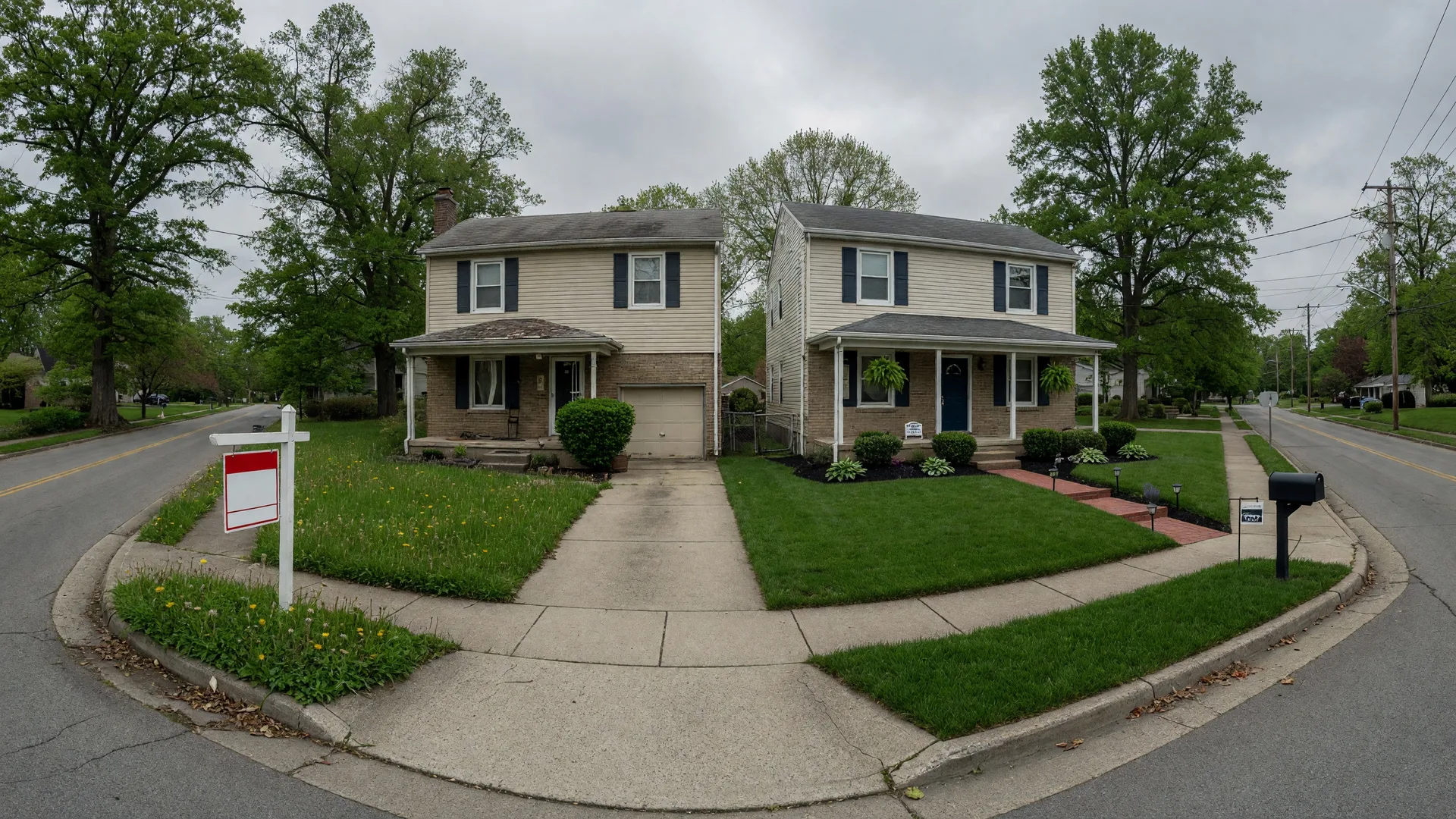
Neighbor-related issues. Sometimes what held a listing back wasn't the home itself but something visible on the neighboring property — an unkempt yard, exterior disrepair, or a shared boundary in poor condition. If you're wondering whether a neighbor's property could be affecting your home's value, I cover that question in a separate article.
Floor plan issues. A home with an unusual layout — a very small kitchen in an otherwise large home, or a configuration that doesn't match how most buyers live — may take longer to sell because the right buyer is more specific.
History issues. Disclosure requirements mean that certain things about a home's history have to be shared with buyers. Some of those things affect perception regardless of how well the issue was resolved.
When a home has a specific challenge like this, the strategy shifts. It's not about ignoring the issue — it's about pricing it appropriately, marketing to the right audience, and being transparent so the right buyer can make an informed decision.
Over the years I've learned that there's a buyer for almost every home. The goal is finding that buyer efficiently — and that requires understanding what the real challenge is rather than pretending it doesn't exist.
Sometimes the Home Didn't Fail — The Strategy Did
This is the distinction I find myself making more than any other in these conversations.
Good homes fail to sell every year. Not because they're bad homes. Because the strategy wasn't right.
The price was off. The marketing didn't reach the right buyers. The home wasn't presented at its best. The agent didn't adapt when something wasn't working.
None of those things have anything to do with the quality of the home itself.
A well-built home in a good neighborhood with motivated sellers can sit on the market for months — and eventually come off unsold — if the strategy behind the listing isn't sound.
That's the most important thing I can tell you from years of working with sellers in exactly this situation: the home isn't the variable. The strategy is.
And a strategy that didn't work once doesn't have to be repeated.
What Expired Listings Can Teach You
If a home in your neighborhood expired — meaning it went off the market without selling — that listing is now public record.
You can see the original list price. You can see how long it was on the market. If it had price reductions, those are visible too.
When I prepare a market analysis for a seller, I always look at expired and withdrawn listings in the area — not just recent sales. Because recent sales tell me what buyers paid. Expired listings tell me what buyers refused to pay. And that's sometimes just as important.
If your neighbor listed at $475,000 and the home expired after 90 days, that tells me something about where the market drew a line. Understanding why it drew that line — whether it was the price, the marketing, or something specific to that home — is where the real insight lives.
Context matters. But the data is there, and ignoring it would be a mistake.
What to Do If You're Planning to List Your Own Home
The most useful thing you can take from a neighbor's failed listing is this: whatever went wrong there is something you have the opportunity to do differently.
Get an honest market analysis
Not a website estimate. A real analysis based on recent comparable sales, current active competition, and a thorough evaluation of your specific property — with a clear explanation of how the number was reached.
Ask your agent what happened to that listing
A good agent will have an informed opinion. It should be based on the data — not just a guess.
Prepare the home before it goes live
Address the deferred maintenance. Declutter. Deal with any odor issues. Make sure the curb appeal is strong. First impressions happen once — and today, that first impression often happens on a screen before a buyer ever drives by.
Ask to see the marketing plan
What specifically will your agent do to make your home stand out online? Photography — who takes the photos? Video — is there a video tour? Digital advertising — where will the home be promoted beyond the MLS? A vague answer is a warning sign.
Set realistic expectations
Even a well-priced, well-marketed, well-prepared home doesn't always sell in the first week. Market conditions matter. Have a plan for what you'll do if week three arrives without an offer — and make sure your agent has one too.
Frequently Asked Questions
Can a home that expired relist and sell successfully?
Yes — and it happens regularly. The most successful relists are the ones where the seller and agent honestly diagnosed what went wrong the first time and made real changes before going back on the market. A price adjustment alone sometimes isn't enough if the marketing or preparation problems haven't been addressed.
Should I wait before relisting after an expired listing?
There's no universal rule. Some sellers benefit from a brief pause to make improvements or let the market reset. Others relist quickly because the timing is right and the fix was straightforward. What matters more than timing is making sure the issues that caused the first listing to fail have actually been resolved.
Does an expired listing hurt my negotiating position?
It can. Buyers who've been watching the market will notice that a home has been listed before. They may use that history as a negotiating point — which is one of the reasons getting it right from Day One matters so much.
My neighbor's home just expired. Does that affect my home's value?
Not directly. Your home's value is based on comparable sales — homes that actually sold. An expired listing tells us about buyer resistance at a certain price point, but it doesn't reduce the market value of nearby homes. What it does tell us is something about buyer behavior and expectations in your immediate area, which is useful context when pricing your own home.
What's the difference between an expired listing and a withdrawn listing?
An expired listing is one where the listing agreement ran its full term without a sale. A withdrawn listing is one where the seller chose to take the home off the market before the agreement expired — sometimes because of a life change, sometimes because they realized the strategy wasn't working. Both are worth looking at when analyzing a neighborhood's market history, but they often represent very different situations.
How do I find out what went wrong with my neighbor's listing?
A real estate agent with access to the MLS can pull the full listing history — original price, price reductions, days on market, and status. That data, combined with knowledge of what the home looked like and how it was marketed, usually tells most of the story. If you're curious about a specific property and what lessons it holds for your own situation, that's exactly the kind of conversation I'm happy to have.
The Bottom Line
When a home in your neighborhood doesn't sell, it's easy to assume the price was simply too high.
Sometimes that's true.
But in my experience, failed listings usually involve a combination of factors — and understanding which ones matters if you're planning to sell your own home.
Price correctly from Day One. Prepare the home before it goes live. Make sure the marketing actually reaches buyers. Choose an agent who will be honest with you, proactive with the strategy, and transparent about what the market is telling them.
The homes that sell quickly and for the strongest prices usually aren't the lucky ones. They're the ones with the right strategy from Day One.
Let's Talk About Your Home
If you're thinking about selling in Louisville or the surrounding area and you want an honest conversation about what your home is worth, what's happening in your specific market, and how to avoid the mistakes that cause homes to sit unsold — I'd be glad to talk. No pressure. No obligation. Just a straightforward conversation.
Get in TouchAbout Tim Hollinden
Tim Hollinden is a former home builder and Broker Associate with The Hollinden Team at eXp Realty, licensed in Kentucky, Indiana, and Alabama. With 24+ years in real estate sales and more than 1,650 real estate transactions, Tim helps buyers and sellers throughout Greater Louisville and Southern Indiana make informed decisions using practical, evidence-based advice. His builder background provides added insight into construction, condition, improvements and value, while nearly two decades as a tech-company CEO shaped the systems-driven marketing he uses today. Tim is also a three-time eXp ICON Agent, an early A.I. Certified Agent™, and holds Zillow's Best of Zillow recognition.
— Tim