
How Accurate Is Zillow's Zestimate for Louisville Homes?
By Tim Hollinden, Broker Associate | The Hollinden Team at eXp Realty
Quick Answer
Zillow's Zestimate is a computer-generated estimate built from public records and recent sales data. It's a useful starting point, but it isn't designed to replace a professional valuation. It can't see your home's condition, recent improvements, or the price limits buyers are actually willing to pay in your neighborhood.
In fairness to Zillow, that's exactly what the Zestimate was designed to be: an estimate -- not a professional opinion of market value.
What You'll Learn
- How the Zestimate is actually calculated
- Why it can swing significantly from month to month
- The specific things it can't see that a local agent can
- What The Neighborhood Ceiling means and why it matters more than people think
- When a Zestimate is useful, and when it's misleading
Tim's Take
I get asked about Zestimates almost every week -- usually from a homeowner who's either thrilled or upset about a number they saw online, sometimes both in the same year. Here's what I tell them: the Zestimate isn't wrong because it's a bad tool. It's limited because it's answering a different question than the one most homeowners are actually asking.
How the Zestimate Actually Works
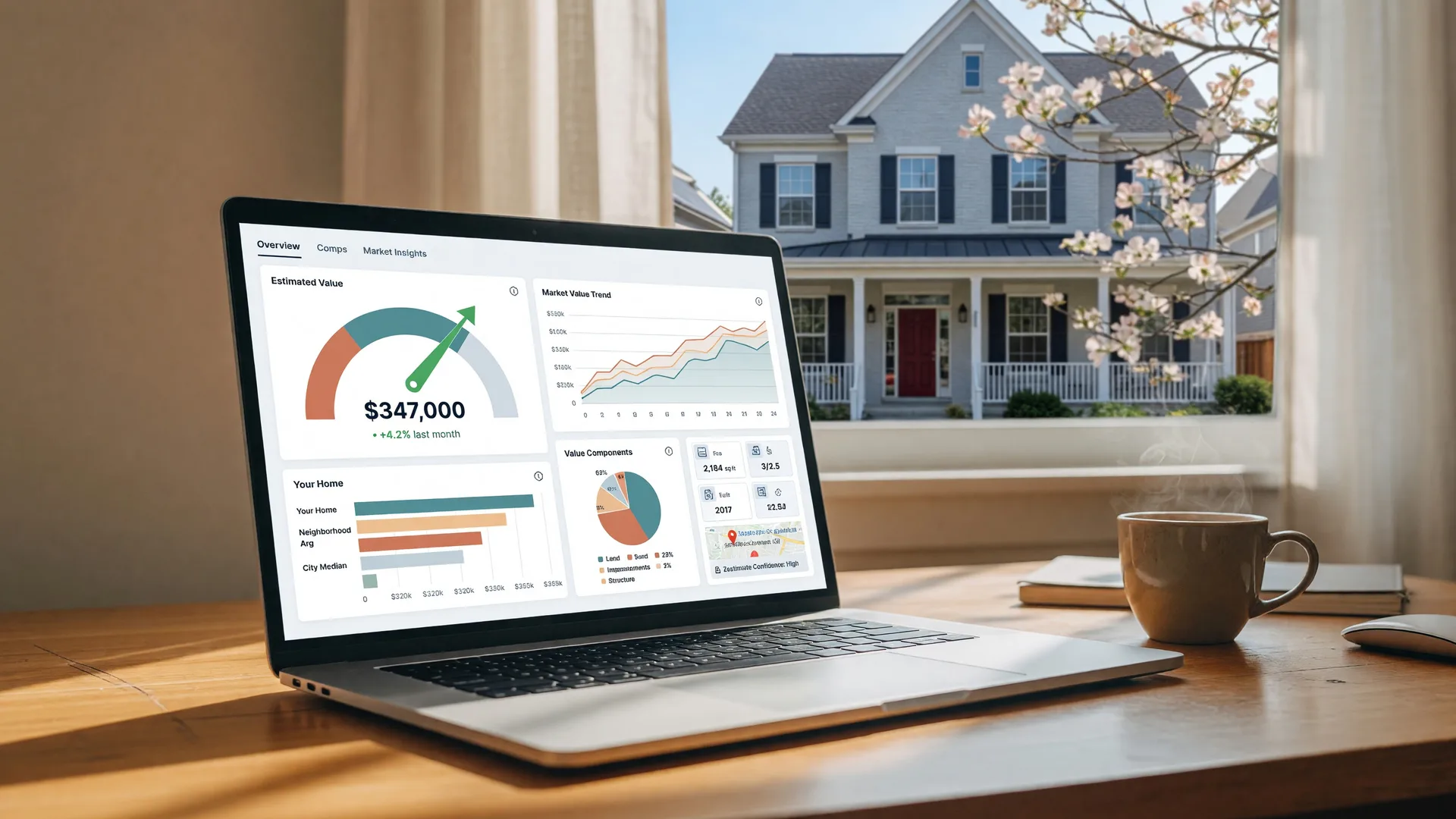
Zillow's automated valuation model (AVM) analyzes hundreds of data points, including public records, tax assessments, recent comparable sales, and market trends to estimate your home's value. Those inputs are powerful, but they're still based largely on publicly available information rather than firsthand knowledge of your specific property. Because the model updates frequently, a new sale down the street, a correction to public records, or changing market conditions can cause your Zestimate to move even when nothing about your home has changed.
This is the core of the gap between what a home is estimated to be worth and what it will actually sell for. An AVM is a forecast, not a result. I explain the full difference between home worth versus sale price in a separate guide, but the short version is this: the Zestimate can tell you what the algorithm thinks, but only a real-world test with actual buyers tells you what the home is worth today.
Zillow reports that its own median error rate runs roughly in the low single digits for homes currently listed for sale, but climbs meaningfully higher -- often several times that -- for homes that aren't on the market. Those figures shift over time and vary widely by area, but the pattern holds: even by Zillow's own numbers, half of all estimates land further off than the reported median, and off-market homes are the least reliable of all.
What It Can't See
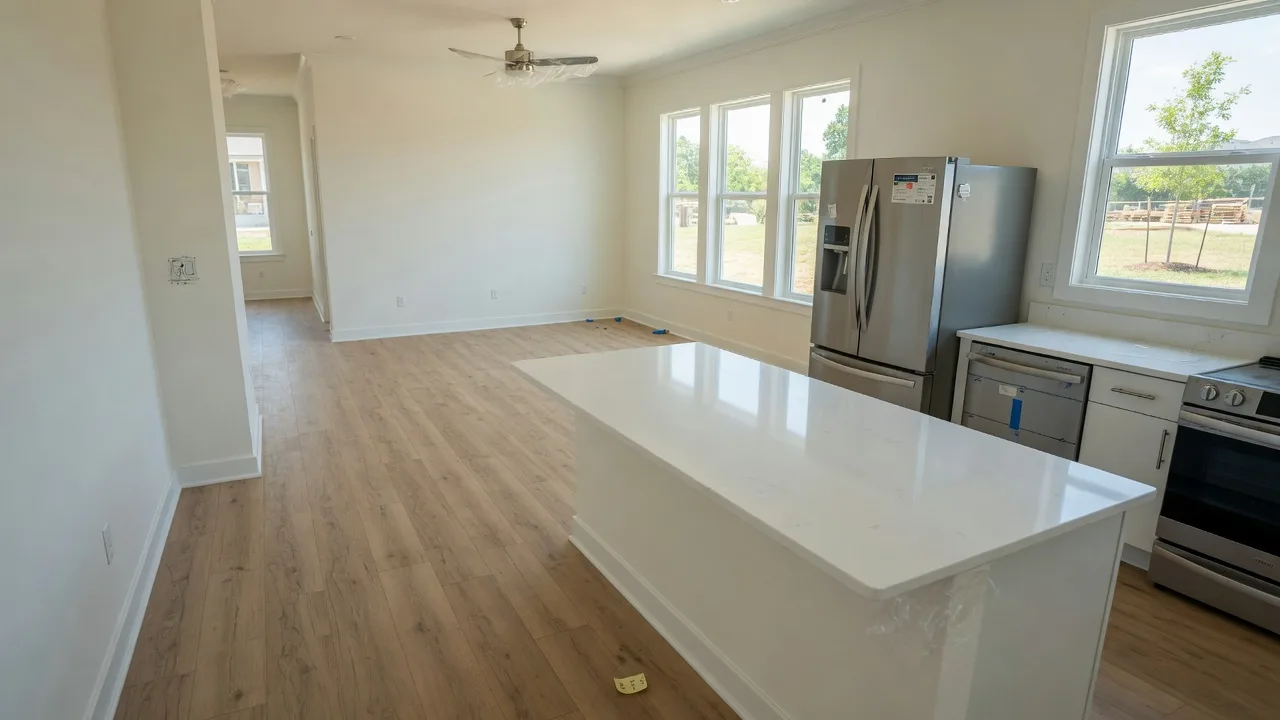
- Interior condition -- fresh paint and updated flooring versus original 1990s finishes look identical to an algorithm.
- Recent updates -- a new roof or renovated kitchen isn't always reflected in public records.
- Lot-specific factors -- backing to green space versus backing to a busy road.
- Presentation -- how a home shows in person has zero bearing on an AVM.
- Current buyer demand -- an algorithm can't see whether multiple buyers are preparing offers this weekend or whether every showing has ended without serious interest.
- Neighborhood boundaries -- two subdivisions separated by a single street can have dramatically different values, yet an algorithm may still treat them as part of the same market.
That's because Zillow can only evaluate publicly available information -- not the countless details buyers notice when they actually walk through your home. This is exactly where The Evidence Test begins: decisions should be based on evidence about your home -- not averages about homes in general. For a deeper look at how condition and updates affect what buyers actually pay, see our guide on what repairs to make before selling your Louisville home.
The Neighborhood Ceiling
Most neighborhoods develop a practical price ceiling over time -- a range where buyers become reluctant to pay substantially more than recent comparable sales support. A $150,000 kitchen doesn't turn a $475,000 house into a $650,000 house if nothing nearby has ever sold above $525,000. Zestimates can miss this in both directions: overestimating a heavily upgraded home beyond what the neighborhood supports, or underestimating a modest home in a stronger-than-average pocket.
This gets even trickier at neighborhood boundaries. I've seen a $500,000-average subdivision sit almost directly next to a $300,000-average subdivision -- sometimes separated by nothing more than a side street. An algorithm doesn't always know where one neighborhood ends and the next begins. If it draws its comparable-sales radius across that line, it can pull the higher-value homes down and the lower-value homes up, landing on a number that doesn't reflect either market accurately. A local agent knows that boundary by name. An algorithm sees only coordinates on a map.
I cover the Neighborhood Ceiling concept in more depth in my guide to which home improvements actually increase value in Louisville, including the Type 2A vs. Type 2B framework that helps sellers decide which projects are worth pursuing.
When a Zestimate Is Useful (and When It Isn't)
Useful for casual curiosity or a rough starting point. Not useful for pricing a home to list, negotiating a purchase, or making a financial decision. A proper Comparative Market Analysis goes beyond recent sales. It evaluates active competition, expired listings, buyer demand, property condition, and neighborhood trends to estimate what buyers are likely to pay today -- not what they paid six months ago. For sellers who still wonder whether a paid appraisal would give them more certainty than a CMA, my dedicated guide on the appraisal vs CMA decision walks through the specific situations where each tool is the right answer.
The better the data, the better the estimate. But no algorithm can replace firsthand knowledge of your home, your neighborhood, and today's buyers. For the full picture on how professional pricing works, see our guide on how much your Louisville home is worth and my framework for pricing your home correctly, including Pricing on the Bubble.
Frequently Asked Questions
Why did my Zestimate change so much recently?
Zillow's model recalculates regularly based on new sales and data updates in your area. It's not a signal that your home's actual value changed overnight. Market conditions, new comparable sales, and even corrections to public records can all shift the number without anything about your home actually changing.
Is Zestimate usually higher or lower than the real sale price?
It varies by market and even by neighborhood; there's no consistent direction, which is itself a reason not to rely on it for pricing decisions. Some homes come in high, some low, and the inconsistency makes it unreliable as a pricing tool.
Can I improve my Zestimate?
Sometimes. Homeowners can update certain property information in Zillow, but even accurate data doesn't guarantee a higher Zestimate. Ultimately, the estimate is still constrained by comparable sales, neighborhood trends, and the limitations of an automated valuation model.
Does Zillow know about renovations?
Sometimes -- but not always. Zillow relies heavily on public records and available data. If your remodel wasn't reflected in those records or doesn't translate into what buyers in your neighborhood are willing to pay, your Zestimate may not accurately reflect its impact.
Why do two homes close together have such different values?
Physical proximity doesn't always mean the same market. Subdivision, school assignment, HOA, and buyer perception can create sharp value differences between homes that are only a few hundred feet apart. I cover the full range of factors that explain this gap in my article on why two identical homes sell for different prices.
Should I use my Zestimate to set my listing price?
No -- it's a helpful starting point for curiosity, not a substitute for a professional valuation grounded in your home's specific condition and today's competition. Pricing based on a Zestimate is one of the most common pricing mistakes Louisville sellers make.
How do I get an accurate number?
A Comparative Market Analysis, prepared using recent comparable sales, current competition, and expired listings specific to your home. That's the starting point for every pricing conversation I have with sellers.
Bottom Line
Your Zestimate isn't wrong for the reasons most people assume -- it's limited because it's built from public data, not firsthand knowledge of your home and its exact neighborhood. Treat it as a starting point for curiosity, not a substitute for professional judgment when real decisions are on the line.
Curious How Your Zestimate Compares to Real Market Value?
Call 502-429-3866 for a no-pressure Comparative Market Analysis. I'll pull the actual comparable sales for your neighborhood and show you what buyers are really willing to pay today.
Request a ValuationCall 502-429-3866
About Tim Hollinden
Tim Hollinden is a former home builder and Broker Associate with The Hollinden Team at eXp Realty, licensed in Kentucky, Indiana, and Alabama. With 24+ years in real estate sales and more than 1,650 real estate transactions, Tim helps buyers and sellers throughout Greater Louisville and Southern Indiana make informed decisions using practical, evidence-based advice. His builder background provides added insight into construction, condition, improvements and value, while nearly two decades as a tech-company CEO shaped the systems-driven marketing he uses today. Tim is also a three-time eXp ICON Agent, an early A.I. Certified Agent™, and holds Zillow's Best of Zillow recognition.
— Tim