
What Is My Louisville Home Really Worth vs. What It Will Sell For?
By Tim Hollinden, Broker Associate | The Hollinden Team at eXp Realty
Quick Answer
Every estimate of your home's worth -- whether it's from a website, an appraiser, a REALTOR\u00ae, or even you -- is ultimately an opinion of value. What transforms that opinion into reality is a willing buyer agreeing to pay it. The two numbers can be close. They can also be far apart. The gap usually comes down to pricing strategy, timing, and how the home is presented -- not the number itself being wrong. Features like a pool can widen this gap in either direction, depending on who is shopping in your price range. I explore this dynamic in my guide on pool home value.
What You'll Learn
- Why "worth" and "sale price" are two different questions, not two ways of asking the same one
- Where the gap between them usually comes from
- How the Evidence Test applies here, the same way it applies to pricing and repairs
- What the Neighborhood Ceiling has to do with it
- What to actually do with this information before you list
Tim's Take
I get asked "what's my home worth?" almost every week. Less often -- but just as important -- I get asked "why didn't it sell for what it's worth?" after the fact. Both questions are really about the same gap, just from opposite sides of the transaction.
Here's the honest answer: worth is an opinion. Sale price is evidence.
Two Different Questions Wearing the Same Sentence
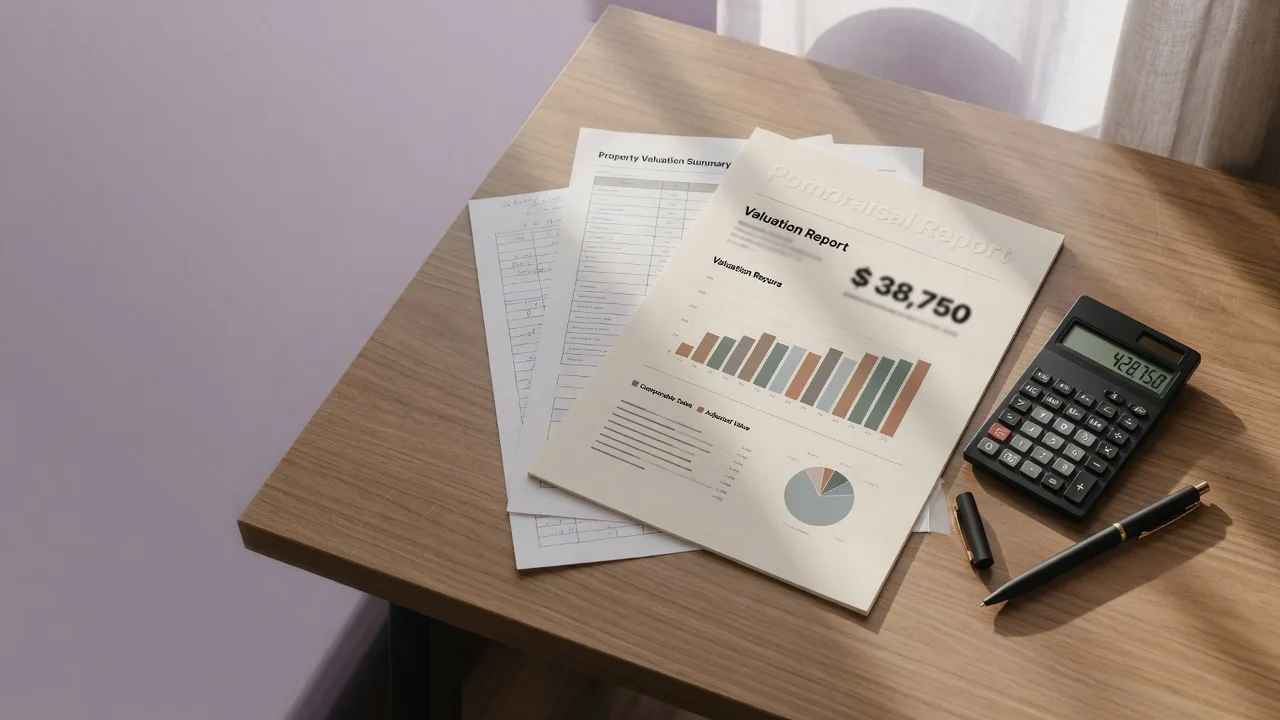
When a homeowner asks what their home is "worth," they're usually really asking one of three different things -- what a website estimates, what an appraiser would say for lending purposes, or what a buyer would actually pay. Those values can end up being close -- but they don't arrive there the same way.
An online estimate is a starting point, not an answer -- it's never walked through your home. An appraisal is built for a lender's purposes, using standards that don't always match how buyers are actually shopping right now. What a buyer will actually pay is the only number that gets tested in the real world.
That's why understanding the gap between "worth" and "sale price" matters more than most sellers realize. If you're pricing based on the first two numbers but the market is answering with the third one, the numbers won't match -- and that gap costs you time, negotiating leverage, and often money. For a closer look at what that gap looks like in practice, I explain the difference between home value and online estimates in more detail elsewhere on the site.
Where the Gap Usually Comes From
When worth and sale price don't match, one of three things is usually happening.
1. The worth number was never real to begin with
It was priced ahead of the evidence, not behind it. Worth based on hope, a past appraisal, or what a neighbor claims they were offered isn't the same as worth based on what's actually selling right now. Markets move. A number that was accurate a year ago may not be accurate today.
2. The market never had a fair opportunity to test it
A home that's poorly presented, mispriced at launch, or listed during weak competition may sell for less than it's genuinely worth -- not because the worth was wrong, but because the sale process didn't give it a fair shot. The gap between what two identical floor plans actually sell for -- and I break down the six factors that drive that gap in my article on comparable homes with different values -- almost never comes down to one thing. Condition and presentation issues are some of the most common home value killers sellers overlook -- and they're almost entirely fixable before you list. This is the flip side of the same coin: sometimes the sale price undersells the true worth, not the other way around.
3. The Neighborhood Ceiling came into play
I've talked about the Neighborhood Ceiling before in the context of home improvements. It applies here too. Every neighborhood has a natural price range that buyers expect, based on what has actually sold nearby. You can improve a home well beyond that range, but the market doesn't always pay you back dollar for dollar once you're above it. Buyers compare homes, not construction costs. A beautifully renovated home can still be worth less than its owner's investment, simply because of what's around it. I cover this in detail in my guide on which home improvements actually increase value in Louisville, including the Type 2A and Type 2B framework that helps figure out where the line is.
The Evidence Test, Applied Here
I use the same process for this question that I use for pricing any home: look at recent comparable sales, look at current competition, and look at expired listings -- what buyers actually chose, and what they walked away from. That's the Evidence Test, and it's the only way to move from an opinion of worth to a realistic expectation of sale price.
The goal isn't to find the highest number someone will say out loud. It's to find the number that's actually defensible against real, recent evidence -- because that's the number a buyer will ultimately agree to. If you're wondering how that plays out in a real pricing decision, my guide on how to price your Louisville home correctly walks through the full framework, including Pricing on the Bubble.
Teaching Yourself to Think Like This
Next time you hear a number -- from a website, a friend, or even your own gut -- ask yourself three questions before treating it as fact: What evidence supports this number? Has anything in my market changed since that number was formed? And is this the ceiling of what similar homes are actually selling for, or just a hopeful guess?
If you can't answer those three questions, you don't have a worth number yet. You have a starting point.
This is also where automated valuation models like the Zestimate fall short most often -- they're a starting point, not an answer. I wrote about the specific limitations in my breakdown of how accurate Zillow's Zestimate is for Louisville homes, including why the error rate is wider for off-market properties and how neighborhood boundaries skew the algorithm.
And if you're worried about making the wrong call on price, you're not alone -- it's the most common mistake I see sellers make. I walk through every one of them in my guide on the biggest pricing mistakes Louisville sellers make, from overpricing to chasing the market down with small reductions.
Frequently Asked Questions
Why did my home sell for less than my Zestimate said it was worth?
Online estimates aren't built from a walkthrough of your home -- they can't account for condition, updates, or how your home compares to what's actually competing against it right now. A sale price reflects real buyer behavior in real time; an online estimate is a statistical guess.
Can my home sell for more than it's "worth"?
A home can absolutely sell above what one valuation suggested if multiple buyers compete for it. That's why market value isn't fixed -- it reflects what the market is willing to pay at that moment. Strategic pricing and strong marketing can create the conditions for that kind of competition. When that happens, understanding how to evaluate multiple offers becomes just as important as creating the competition in the first place.
Is an appraisal the same as what my home is worth?
No. An appraisal is an opinion of value prepared for lending purposes, using its own standards. It can be close to market value, but it isn't the same question a buyer is asking when deciding what to offer. Appraisals look backward at closed sales; buyers look forward at what they're willing to pay today. For a full breakdown of when a pre-listing appraisal helps and when it does not, see my article on should I get an appraisal before selling.
How do I find out what my home will actually sell for?
The closest answer comes from a professional Comparative Market Analysis grounded in recent comparable sales, current competition, and expired listings -- the same Evidence Test I use for every home I price. There's no guaranteed number, but there is a defensible range -- and that's where smart pricing starts.
Bottom Line
Your home's worth and its sale price aren't rivals -- they're just two different stages of the same question. One is an opinion supported by evidence. The other is the result of that opinion being tested against real buyers, in a real market, right now. The best way to close the gap between them is the same in both directions: start with evidence, not hope.
If you'd like an honest, evidence-based read on what your Louisville home is actually likely to sell for -- not just an online guess -- I'd be happy to walk through it with you. No pressure, no obligation.
Get an Evidence-Based Opinion of Your Home's Value
Call 502-429-3866 for a no-pressure conversation about what your home is really worth -- and what it will actually sell for in today's Louisville market.
Get in TouchCall 502-429-3866
About Tim Hollinden
Tim Hollinden is a former home builder and Broker Associate with The Hollinden Team at eXp Realty, licensed in Kentucky, Indiana, and Alabama. With 24+ years in real estate sales and more than 1,650 real estate transactions, Tim helps buyers and sellers throughout Greater Louisville and Southern Indiana make informed decisions using practical, evidence-based advice. His builder background provides added insight into construction, condition, improvements and value, while nearly two decades as a tech-company CEO shaped the systems-driven marketing he uses today. Tim is also a three-time eXp ICON Agent, an early A.I. Certified Agent™, and holds Zillow's Best of Zillow recognition.
— Tim