
Which Home Improvements Actually Increase Value in Louisville?
By Tim Hollinden, Broker Associate | The Hollinden Team at eXp Realty
Quick Answer
Some improvements protect the sale you were always going to get. Others genuinely raise it. And a surprising number of expensive projects do neither — they just make the seller feel better about the money they spent. The neighborhood — not the project — usually determines how much buyers will pay. The real question isn't what the project cost. It's whether comparable sales in your specific neighborhood show buyers actually paying more for it.
What You'll Learn
- Why "it cost me $30,000" and "it added $30,000 in value" are two completely different claims
- How to extend the Type 1 vs. Type 2 framework specifically to value-adding decisions
- Which categories of improvement most consistently show up in what buyers pay for in Louisville
- Why the same $50,000 kitchen can be a smart move in one neighborhood and a wasted one two streets over
- How to apply the Evidence Test before you spend a dollar, not after
Tim's Take
In my experience, the sellers who ask me "will this add value?" before they start a project almost always come out ahead of the sellers who ask me after. Once the money's spent, I can only tell you whether it helped — I can't undo it. So this article is really about how to ask the question at the right time.
Here's what I've seen happen more than once: a seller puts real money into a kitchen, assuming it'll come back dollar-for-dollar at closing. Sometimes it does. Sometimes it barely moves the needle, because the neighborhood's comparable sales show buyers in that price range simply aren't paying a premium for it — they're buying the location, the lot, or the school district, and the kitchen was never the deciding factor. The house still sells. It just doesn't sell for what the improvement cost.
The Two Questions Before Any Improvement
Before spending a dollar on anything meant to increase value — not just protect it — I tell sellers to ask two questions, in this order:
- Is this a Type 1 improvement or a Type 2 improvement? (This determines whether you're protecting value or trying to add it.)
- If it's Type 2, does the evidence — actual comparable sales in this specific neighborhood — show buyers paying more for it, or is that an assumption?
Skipping straight to "let's redo the kitchen" without asking either question is how a homeowner ends up with a beautiful renovation and a listing that performs exactly the same as the house next door that didn't renovate at all.
Type 1 vs. Type 2 Improvements — Extended for the Value Cluster
I introduced Type 1 vs. Type 2 Improvements when talking about repairs before listing: Type 1 protects value — the things that show up on an inspection or that buyers notice immediately and penalize you for if they're wrong. Type 2 increases value — but only conditionally, and that condition is the part most sellers skip.
For the Value cluster specifically, I break Type 2 down one level further:
Type 2A — Broad-market value adders
Definition: Improvements that show up as a premium across almost any comparable-sales pull, almost anywhere in Louisville.
Examples: Fresh, neutral paint; refinished or replaced flooring in main living areas; genuine curb appeal — landscaping, front door, exterior lighting; light kitchen and bathroom refreshes that modernize without changing the footprint.
Why they work: They tend to pay back close to, and sometimes above, their cost — because they remove reasons for a buyer to mentally discount the price, and they appeal broadly rather than to one specific taste.
Type 2B — Conditional or neighborhood-capped improvements
Definition: Improvements that can add real value, but only up to whatever ceiling the neighborhood's actual sales support.
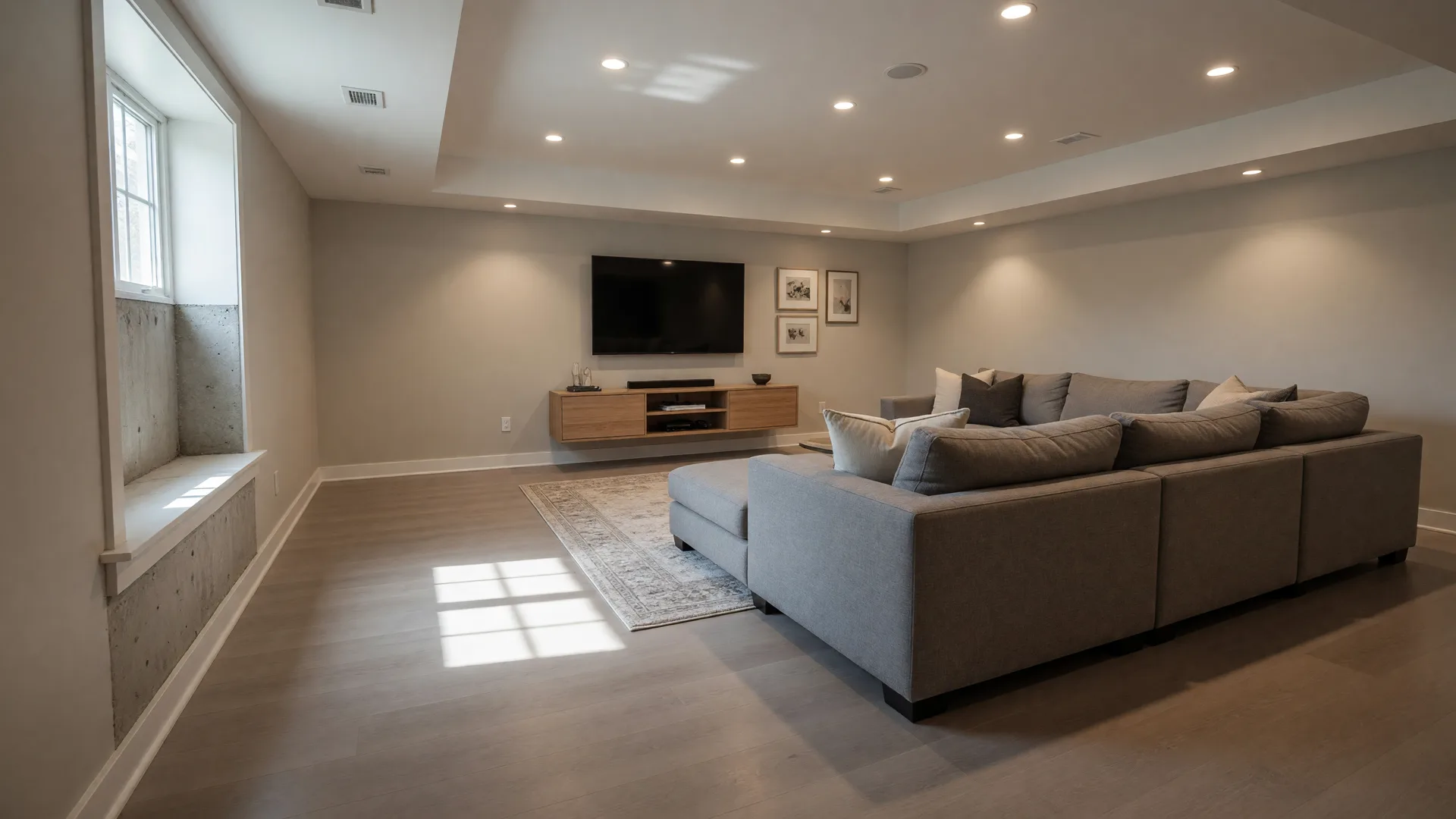
Examples: A full kitchen gut-and-rebuild, a primary suite addition, a finished basement, a finished attic, a pool. (I broke down the basement finishing ROI question in a separate guide, I cover the attic conversion ROI question in another, and the pool home value question in a third.)
The Neighborhood Ceiling: These aren't bad investments — they're simply evidence-dependent investments. They only make sense once you've checked what the top of the market in that specific neighborhood is actually paying for a home with that feature. This is also exactly why Zestimate accuracy varies so much between neighborhoods — an algorithm drawing its comparable-sales radius across a neighborhood boundary can miss the sharp value differences that local agents know by name.
Final takeaway: Renovating past the Neighborhood Ceiling means you paid for something the next buyer in that area won't pay you back for.
The mistake I see most often isn't picking a bad project. It's treating every Type 2B improvement like it's automatically Type 2A — assuming broad appeal for something that's actually capped by the neighborhood.
This is where the difference between what you believe your home is worth and what it will actually sell for starts to show up in real dollars. I wrote about that gap specifically in my guide on what your home is really worth versus what it will sell for — because understanding the Neighborhood Ceiling is just the first step; knowing how to price around it is the second.
The Evidence Test, Applied to Value
Before recommending any major project, I want evidence — not opinions. I usually look at three things:
- Recent comparable sales — homes that sold with the feature versus without it, in the same neighborhood and price range
- Current competition — what's actively listed right now with and without that same feature
- Expired listings — homes that sat and didn't sell, which often shows the ceiling just as clearly as a sale does
If the comps show homes with a renovated kitchen consistently selling for meaningfully more than similar homes without one, that's evidence, and the project likely pays back. If the comps show almost no price difference, that's evidence too — just the opposite conclusion — no matter how nice the finished project would look.
A Quick Example
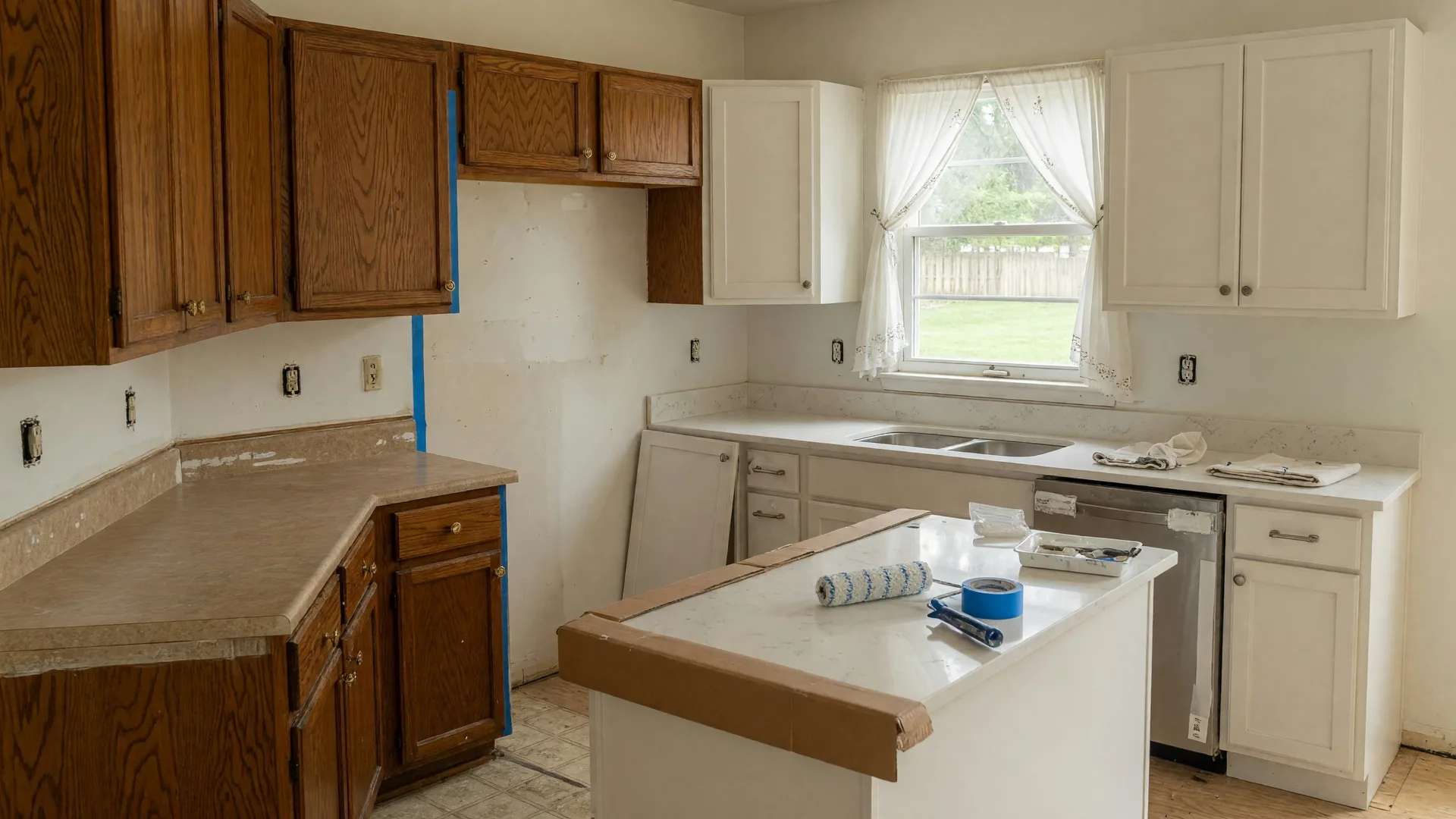
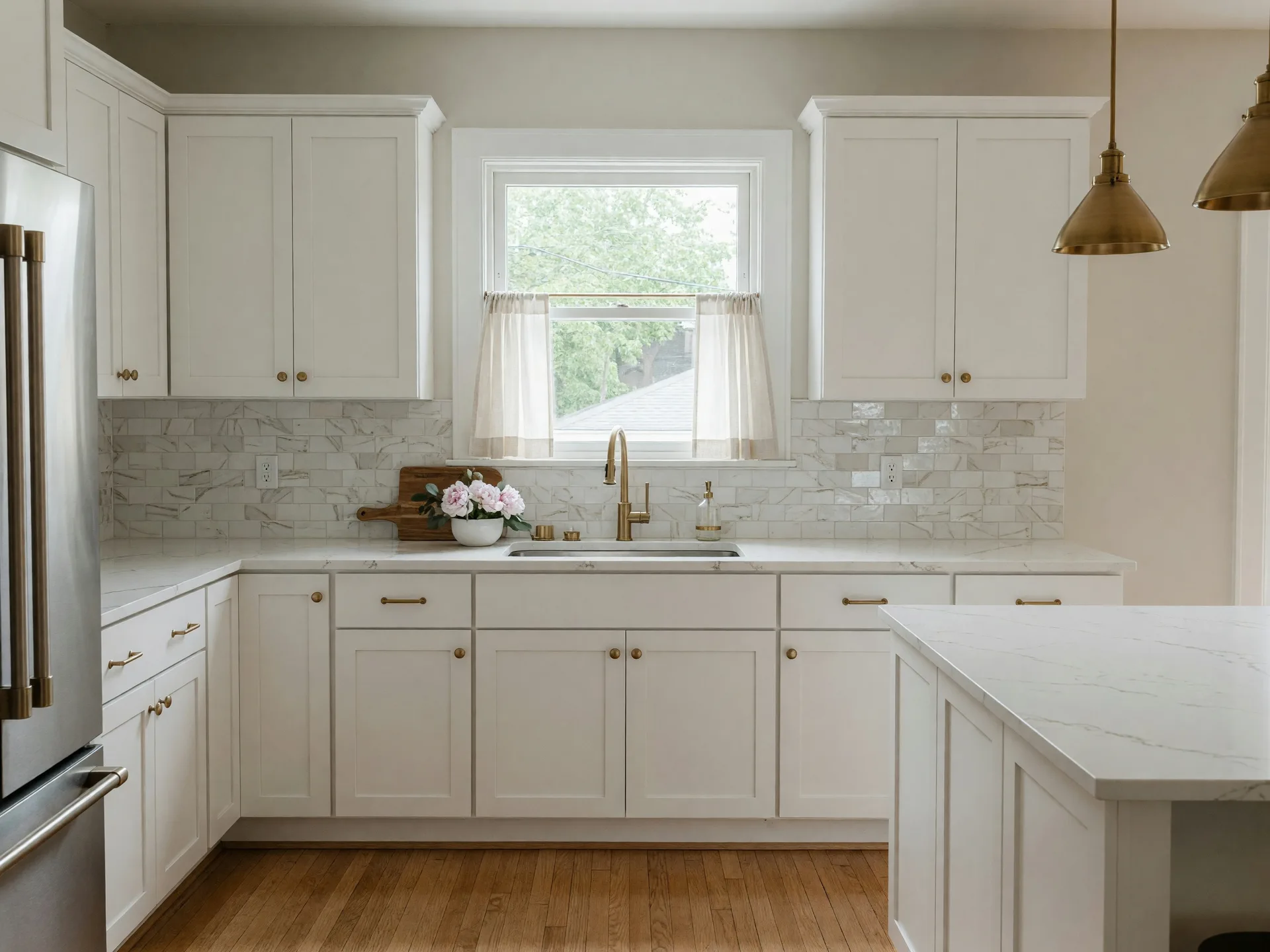
I've walked sellers through this exact situation more than once: a homeowner is ready to commit to a full kitchen remodel before listing, assuming it's simply what buyers expect. When we actually pull the comparable sales for that specific neighborhood, the story is often different — homes with an updated-but-not-fully-renovated kitchen are selling for essentially the same price as homes with a brand-new one, because buyers in that price range are weighing the lot and the location far more heavily than the cabinets. A lighter refresh — new hardware, paint, updated lighting — usually captures most of the visual improvement at a fraction of the cost, and the difference goes straight back in the seller's pocket instead of into a contractor's.
National remodeling data has consistently shown the same general pattern over the years: minor, cosmetic kitchen updates often deliver a stronger return on investment (ROI) than full gut renovations. It's not that a full remodel never pays off — it's that the dollar-for-dollar return usually shrinks as the scope and cost grow, which is exactly why checking your specific neighborhood's comparable sales matters more than following a national average. For a deeper look at when a full remodel might still make sense, see our guide on whether to remodel before selling your Louisville home.
Frequently Asked Questions
Does a swimming pool increase home value in Louisville?
It depends heavily on the neighborhood and price point. In some higher-end Louisville neighborhoods where pools are common and expected, they can support the home's value. In many others, a pool is a Type 2B improvement with a hard Neighborhood Ceiling — it may not add much at resale, and for some buyers it's actually a drawback because of maintenance and safety concerns. This is a case where checking the actual comps before building is essential. I cover the full swimming pool resale value question in a dedicated article.
Is a kitchen remodel always worth it before selling?
Not always. A full remodel is a Type 2B improvement — it can pay off, but only up to what the neighborhood's comparable sales actually support. A lighter refresh is often the better move; see our guide on whether to remodel before selling for how I evaluate that specific decision.
What's the single most reliable value-adding improvement?
Genuine curb appeal — clean landscaping, fresh mulch, an inviting front door, and a well-maintained exterior — consistently shows up as a Type 2A improvement across almost every price point and neighborhood I've worked in, because it changes a buyer's first impression before they've even stepped inside.
How is this different from deciding what repairs to make?
Repairs, addressed in our guide to pre-listing repairs, are mostly Type 1 — protecting value you already have. This article is about Type 2 decisions — spending money specifically to try to increase value beyond where it already sits. The two questions are related but not the same, and I'd encourage reading both before deciding what to do with a home before listing.
Should I get a professional opinion before starting a project?
Yes — and ideally before you get quotes from a contractor, not after. I'd rather sit down with a seller early, pull the actual comparable sales for their neighborhood, and help them decide whether a project is Type 2A, Type 2B, or not worth pursuing at all, than have that conversation after the money's already spent.
Bottom Line
The smartest home improvements aren't the ones that cost the most — they're the ones buyers have already proven they'll pay for.
Real estate isn't an appraisal of what you spent — it's a reflection of what the next buyer is willing to pay.
A neighbor's visible property issues are one of those external factors sellers worry about. I cover whether bad neighbors actually affect resale value in a separate article.
That's why every improvement should start with evidence — not estimates, assumptions, or wishful thinking. And it's worth remembering that protecting the value you already have is just as important as trying to add more — which is why I also recommend sellers understand what actually lowers a home's value before they start planning upgrades.
Related Reading
- Does a Finished Attic Add Value? — Attic conversion ROI and the ANSI ceiling-height rule
- Should I Remodel Before Selling My Louisville Home? — Refresh vs. renovate: which projects pay off
- What Repairs Should I Make Before Selling My Louisville Home? — Type 1 repairs that protect your sale price
- What Repairs Should I NOT Make Before Selling My Louisville Home? — Improvements to skip before selling
- How Do I Price My Louisville Home Correctly? — Pricing on the Bubble and getting the number right
- How Much Is My Louisville Home Worth? — Understanding what determines home value
Thinking About a Project Before You List?
I'd be happy to pull the actual comparable sales for your neighborhood and walk through it with you — no pressure, no obligation. Call 502-429-3866.
Get in TouchCall 502-429-3866
About Tim Hollinden
Tim Hollinden is a former home builder and Broker Associate with The Hollinden Team at eXp Realty, licensed in Kentucky, Indiana, and Alabama. With 24+ years in real estate sales and more than 1,650 real estate transactions, Tim helps buyers and sellers throughout Greater Louisville and Southern Indiana make informed decisions using practical, evidence-based advice. His builder background provides added insight into construction, condition, improvements and value, while nearly two decades as a tech-company CEO shaped the systems-driven marketing he uses today. Tim is also a three-time eXp ICON Agent, an early A.I. Certified Agent™, and holds Zillow's Best of Zillow recognition.
— Tim