
New Construction in Louisville: What Buyers Need to Know

New construction in Louisville offers real advantages — modern layouts, energy-efficient systems,and the chance to personalize your home from the ground up. But it also comes with trade-offs most buyers don't find out about until they're already under contract: builder contracts written around the builder's own process, timelines that shift,and a sales office that works for the seller, not you. Knowing what to expect —and understanding who represents your interests — can help you make better decisions throughout the process.
What You'll Learn
- Why buyers are drawn to new construction,and where that appeal holds up
- What actually changes about the process compared to buying an existing home
- Why buyer representation works differently in new construction,and what's changed since 2024
- What to verify yourself instead of taking on faith
- Where to go next, depending on which part of the process you're facing
Tim's Take
Before I sold real estate, I built custom and spec homes across Jefferson County, Oldham County,and Southern Indiana for years. That's given me a different starting point than most agents have when a buyer asks me about new construction — I've looked at it from both sides, first as a home builder,and later while representing buyers in real estate transactions.
Over the years, a lot of the problems I've seen in a new construction purchase weren't dramatic. They were small, avoidable things: not reading what a contract's allowances actually cover, assuming a verbal promise from a sales rep will hold, or not having anyone in your corner who knows what a builder's numbers really mean.
This article is the starting point for that whole process. If you already know you want to build,and you're weighing that against buying existing, start with Should I Build or Buy a Home in Louisville? instead — this one assumes you're already looking at new construction,and want to know what you're walking into.
Why Buyers Are Drawn to New Construction
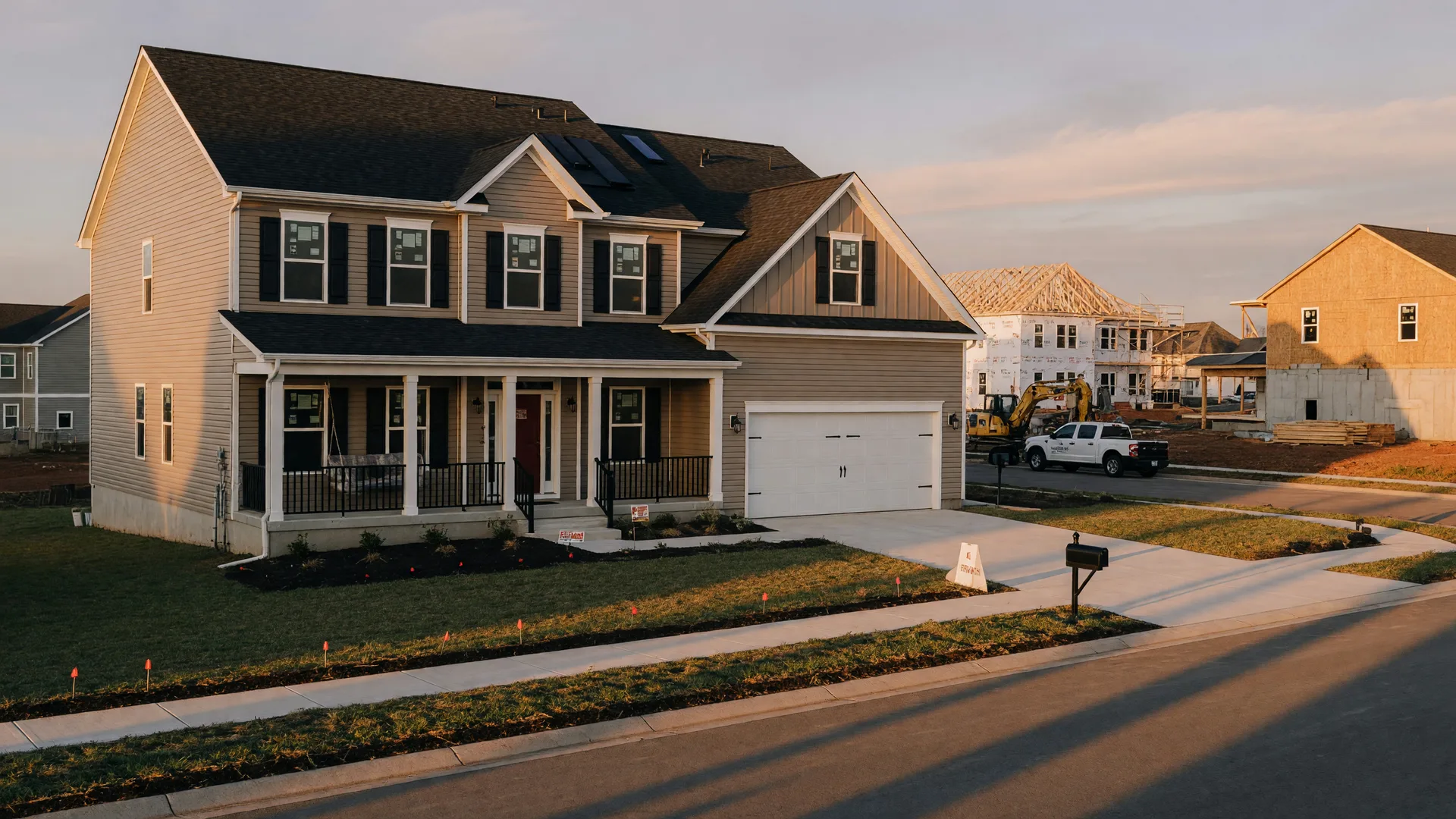
The appeal is real. New construction typically means fewer immediate repairs, systems and finishes built to current expectations,and layouts designed around how people actually live now — open kitchens, walk-in closets, dedicated home offices, smart-home wiring already in place. Energy efficiency is part of that too, though it's worth being precise about how. Homes built to current codes generally use meaningfully less energy for heating and cooling — better insulation,tighter air sealing,and more efficient HVAC,and windows all help. Whether that translates into a lower total utility bill depends on the home's size,and how it's used,since newer homes also tend to be larger with more appliances running. Some builders offer ENERGY STAR or HERS-rated options specifically,which go further — that's usually a specific certification worth asking about directly,not something to assume is already included.
What Actually Changes About the Process
New construction isn't just "buying a house that happens to be new." A few things work differently:
- Timelines can shift. Weather, material availability,and permitting all affect when a home is actually finished,and builders generally aren't able to guarantee an exact date this far out.
- What you see isn't always exactly what you get. Model homes can include upgraded finishes,and options that aren't part of the base price — it's worth confirming in writing which of what you toured is actually included at your price point,and which is an add-on.
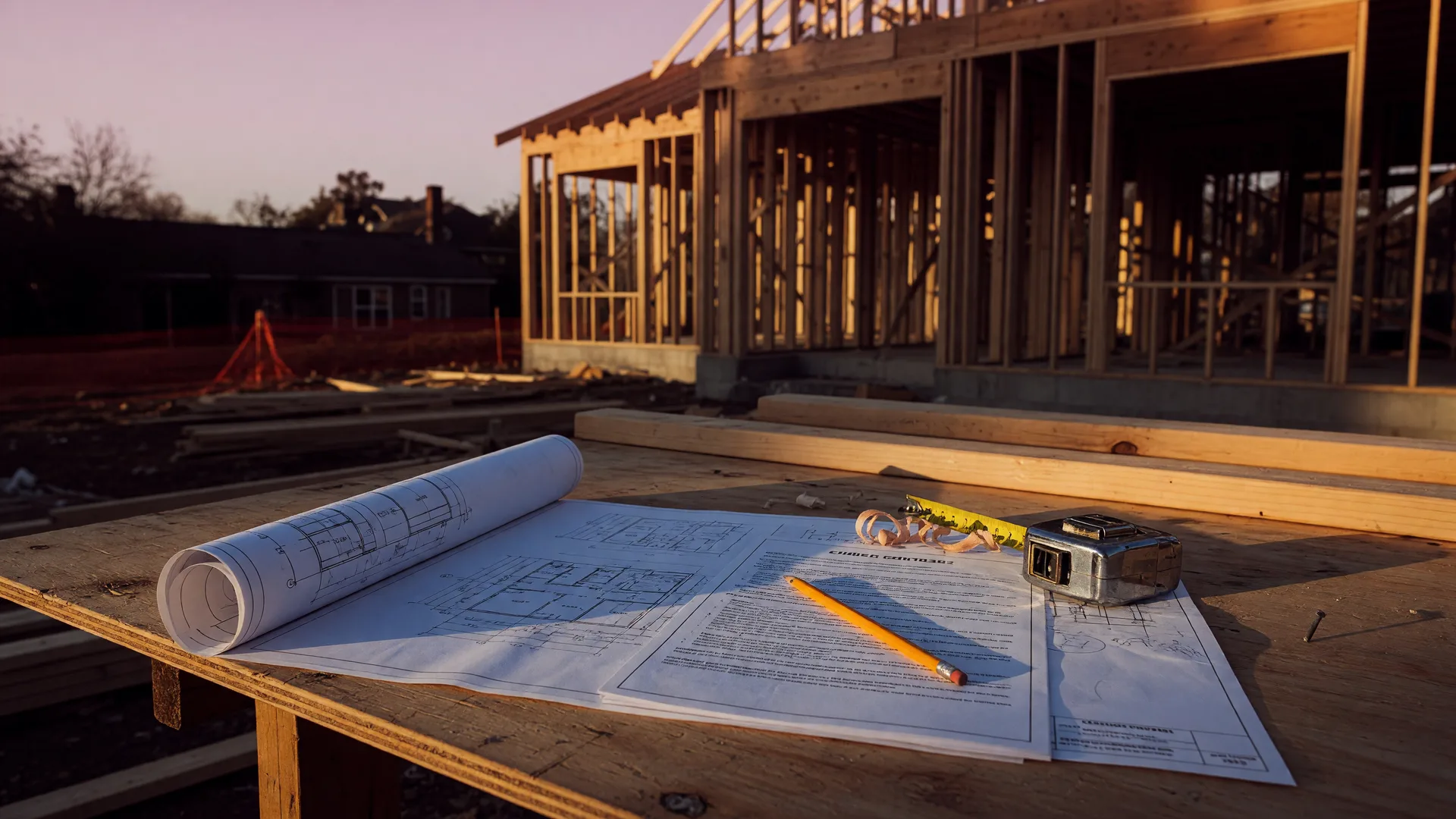
- Builders commonly use their own agreements. These are typically structured around the builder's own construction process — covering timelines,selections,change orders,deposits,and other requirements specific to building a home rather than buying an existing one. Your real estate agent can walk you through how the transaction mechanics work,and flag questions or issues worth raising,but interpreting the legal language itself,or getting formal legal advice on specific terms,is something to bring to an attorney.
Buyer Representation: What's Actually Changed
Many buyers still don't realize they can bring their own agent to a new construction purchase — the sales rep in the model home represents the builder,not you. Since 2024,the way that representation gets formalized has changed industry-wide. If you want your own representation,you and your agent will typically sign a written buyer representation agreement before touring homes together,and that agreement is what establishes how your agent is compensated. In new construction specifically,some builders offer to contribute toward that compensation as part of their standard practice; others don't,or structure it differently,and it can even vary between communities from the same builder. It's worth asking directly,before you ever walk into a model home,so you know upfront what you're responsible for,and what the builder may cover. Having your own representation matters most at the points a builder's sales office isn't positioned to advocate for you: contract negotiation,design center selections,inspections,and the final walkthrough. I stay involved through all of it — not to replace your home inspector or the municipal inspections,but as another experienced set of eyes who understands how builder transactions,and numbers work,and who's watching for something worth questioning while it's still visible.
What to Verify Yourself
- What's actually included in the base price versus what's a paid upgrade
- Whether the builder offers any buyer-agent compensation,and what it is
- What the contract's allowances cover,and what happens if you go over them
- What the builder's warranty covers,and for how long,versus a separate home warranty
- Whether the builder has a documented track record you can check,not just a model home
Frequently Asked Questions
Is new construction more expensive than buying an existing home in Louisville?
Not necessarily,but it's rarely a simple apples-to-apples comparison once lot cost,upgrades,and allowances are counted honestly. Should I Build or Buy a Home in Louisville? breaks down the real cost comparison in detail.
Do I need my own real estate agent when buying new construction?
You're not required to,but the builder's on-site agent represents the builder's interests,not yours. If you want your own representation,you'll typically sign a written buyer representation agreement that spells out how your agent is compensated — sometimes the builder contributes toward that as part of their standard practice,sometimes they don't,so it's worth asking directly before you tour homes.
How long does it typically take to build a new home?
It varies significantly by builder,lot readiness,and how quickly selections get made — ask your specific builder for their actual track record rather than relying on a general estimate.
What's the difference between a builder's warranty and a standard home warranty?
They cover different things for different periods, and the distinction matters more than most buyers expect. This deserves its own detailed answer — see Builder Warranty vs. Home Warranty: What's the Difference?
Can I negotiate with a builder the way I would with a private seller?
It's a different kind of negotiation than with an individual seller. What's actually negotiable — price,incentives,upgrades,or closing cost help — varies by builder,by community,by available inventory,and by whatever incentive programs are running at the time. It's worth asking directly rather than assuming either way.
Are new homes really more energy efficient than older ones?
Generally,yes,for heating and cooling specifically — current codes require better insulation,and more efficient systems. Whether that lowers your total utility bill depends on the home's size,and how you use it,so it's not an automatic guarantee.
Bottom Line
New construction can be an excellent choice in the Louisville market,but it rewards buyers who go in informed rather than buyers who assume the process works the same way resale does. Know what you're actually getting at your price point,understand how your representation works,and who's paying for it,and don't take a builder's promises at face value without something in writing. That's true whether you're just starting to look or already have a contract in front of you.
Related reading
Which Builder Upgrades Are Actually Worth Paying For?A former home builder's take on which options are worth the money at the builder's table,and which are better done later.
If you're considering new construction in Louisville,and want someone who's actually built homes to walk through what you're looking at,I'd be happy to talk through your specific situation —no pressure,no obligation.
Call 502-429-3866.
About Tim Hollinden
Tim Hollinden is a former home builder,and Broker Associate with The Hollinden Team at eXp Realty. For more than 24 years, he has completed over 1,650 real estate transactions throughout Greater Louisville by combining builder knowledge with practical,evidence-based real estate advice.