
Which Builder Upgrades Are Actually Worth Paying For?
QUICK ANSWER
Some builder upgrades are worth paying for at the time you build; others may make more sense to add later.The upgrades worth paying for at the time of contract are usually the ones that are difficult,expensive,or impossible to add after the home is built — not simplythe ones that look appealingon the options sheet.How the upgrade actually gets paid for matters too,and that's worth verifying rather than assuming.
WHAT YOU'LL LEARN
- Why an upgrade decision at the builder's table is a different decision than an improvement decision on an existing home
- A decision principle for telling apart upgrades that are hard to add later from ones that remain easy to add
- Why how you actually pay for an upgrade — now or later — is worth confirming rather than assuming
- A simple filter to run before saying yes to any optional upgrade
- Which kinds of upgrades I tell my own clients to weigh most carefully
TIM'S TAKE
I built custom and spec homes for years before I ever sold real estate,and I sat across the table from buyers picking through an options list more times than I can count.Here's what I noticed,over and over: buyers tend to evaluate every upgrade the same way — "do I want this,and can I afford it?"That's the wrong question.The right question is whether this is something you can only get right now,or something you could add later,potentially for less money —and how you'd actually be paying for it either way.
I've seen buyers spend thousands on upgrades they could have added themselves within a year of moving in.I've also seen buyers skip a low-cost option that would have cost far more to retrofit six months after closing.Same options sheet,completely different outcomes — because they were answering different questions without realizing it.
WHY THIS DECISION IS DIFFERENT FROM A RESALE IMPROVEMENT
Most of what I've written about home improvements addresses homes that already exist — should you remodel before selling,is a kitchen update worth it,what actually moves the needle on value.That thinking is built around one question:does this improvement add more value than it costs?
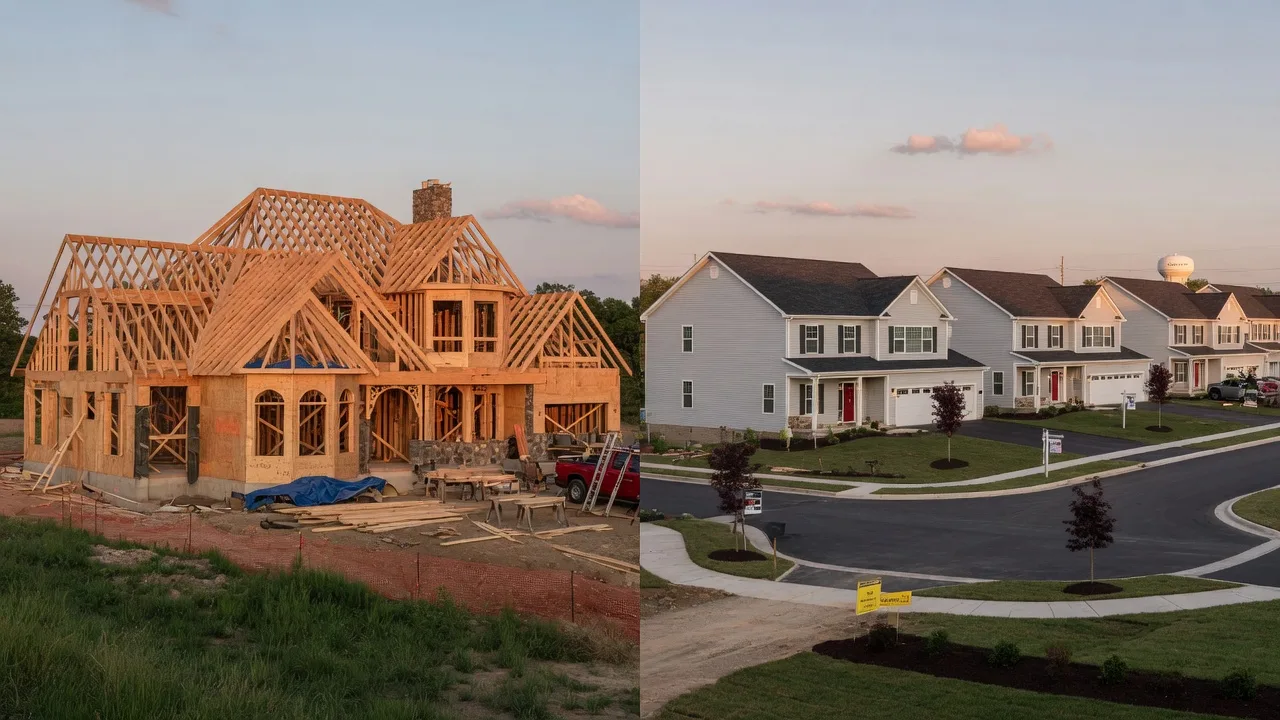
A builder's options list is a different situation,because a second variable enters the picture:timing.On an existing home,almost anything can be added later — a bathroom can be remodeled,a basement can be finished,a fence can go up next spring.During new construction,some of those same items are only available,or only affordable,during a narrow window before drywall goes up.Once that window closes,the cost of adding the same thing later can be significantly higher — sometimes it isn't practically possible at all without opening up finished walls.
That's why I think about builder upgrades using two questions instead of one:is this worth the cost,and can I still get this later if I skip it now?The same decision principle behind the Refresh vs.Renovate Test And Type 1 vs.Type 2 Improvements — frameworks I use with sellers deciding what to fix before listing — is useful here too.It's not that a builder-options decision is identical to those situations;it's the same underlying habit of distinguishing what's hard or costly to change later from what remains easy to change,applied to a different moment in the homeownership timeline.
THE PAYMENT QUESTION: HOW WILL YOU ACTUALLY PAY FOR THIS?
This is a piece of the decision I think doesn't get enough attention,and it deserves its own discussion,not just a passing mention.How a builder upgrade actually gets paid for isn't the same in every situation.Some upgrades may become part of your purchase priceand potentially get financed along with the rest of your mortgage.Others may require cash or payment during construction,depending on the builder's own requirements,your loan program,how the lender and appraiser treat the upgrade,and the timing of when the option is selected.On the other side of the comparison,an improvement completed after closing isn't automatically a cash purchase either — it might be paid in cash,or it might be financed separately,such as through a home equity line or a renovation loan.
I don't think buyers should assume "builder equals financed into the mortgage"and"later equals cash out of pocket."Either assumption can be wrong,andthe exceptions matter.The only reliable way to know is to ask the builder how a specific upgrade is billed,andask your lender how it's treated for financing and appraisal purposes — before you decide whether to add it now or wait.
Once you know how something would actually be paid for on both sides of that comparison,the decision gets a lot clearer.Spreading a cost over the life of a mortgage is a very different financial commitment than paying for the same thing in cash,andeither one might turn out to be true for a given upgrade.This is worth confirming with real numbers,not assumed based on general patterns.
COSMETIC AND FINISH UPGRADES: COMPARE BEFORE YOU COMMIT
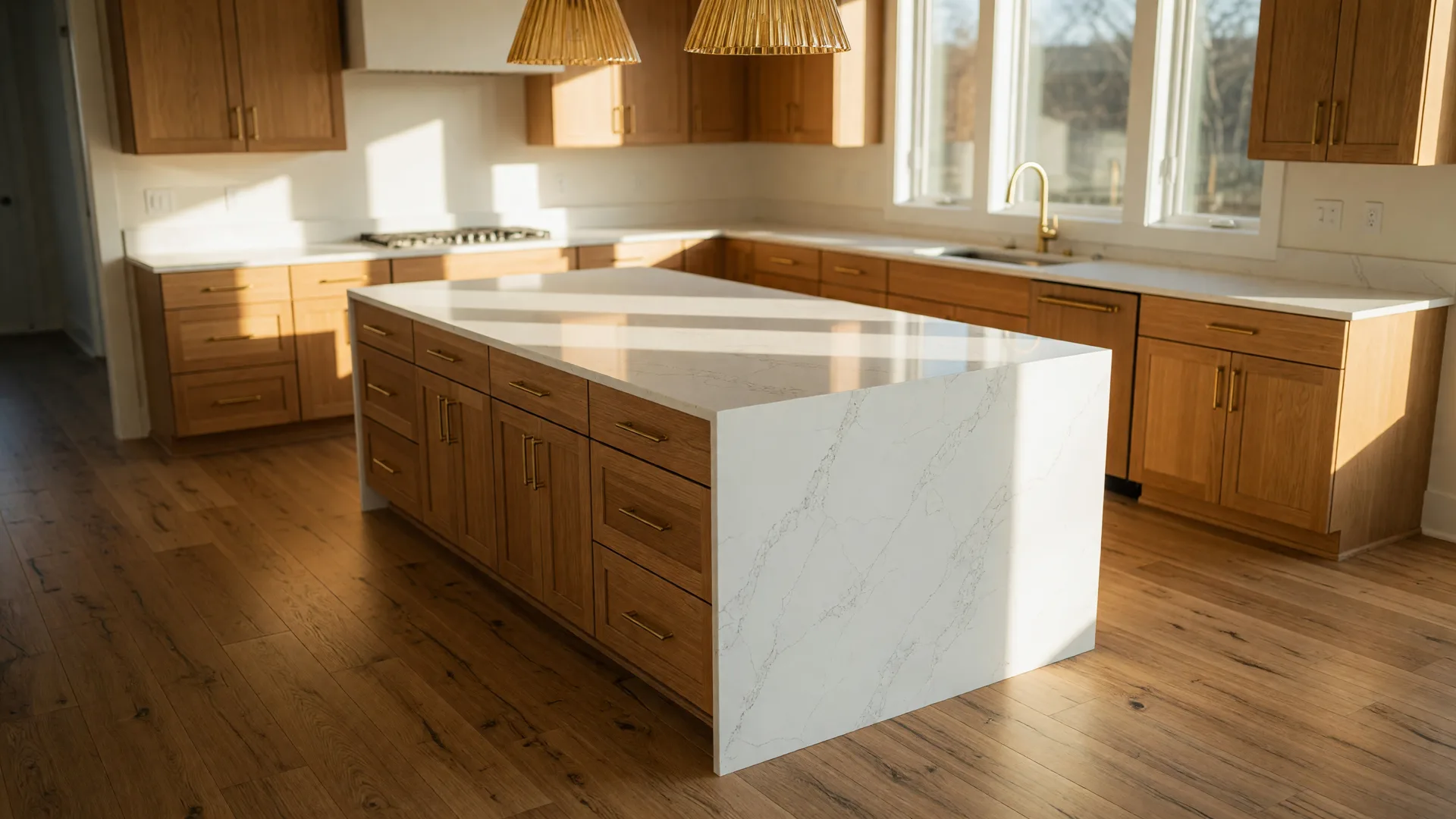
This is where I see buyers make the least-informed decisions,and it's also where comparing before committing matters most.Before agreeing to a builder upgrade on counters,cabinet hardware,light fixtures,flooring,or paint-grade trim,I ask one question:could this be added or swapped after closing,by someone other than than the builder,for a similar or better price?
The honest answer is that it depends — on the builder,the specific item,andthe local market at the time.Some finish upgrades genuinely cost more througha builder than they would independently after closing.Others are competitively priced,or worth paying for anyway because of convenience,integration with the rest of the build,warranty coverage,how the cost is ultimately paid for,or avoiding the disruption of doing it later.I've seen it go both ways with light fixtures,hardware,flooring,countertops,andlandscaping — none of them deserve a blanket yes or no.Each is worth pricing out on its own before you decide.One category where I do think the disruption argument carries real weight:custom tile work,like a tiled shower surround chosen at the builder stage.If you decide after moving inthat you want a different tile,you're not just swapping a finish — you're tearing out existing tileand waterproofing to redo it,which is a meaningfully bigger project than most buyers expect.That's a specific observation about one category,not a rule that applies across every finish item — but it's a good example of why "can I change my mind later" is worth asking before you decide,not after.
A SIMPLE FILTER
When a client asks me about a specific upgrade,I walk them through this:
- Is this difficult,expensive,or disruptive to add after the home is built?If yes,it deserves serious consideration now — this doesn't mean automatic approval,since price still matters,butthe cost of waiting is a real factor to weigh.If no,move to question two.
- Is the builder's price for this upgrade actually competitive with getting it done independently after closing?IfThe builder's price is close to or better than what you'd pay elsewhere,there's less reason to wait.IfIt's meaningfully higher,waiting may make more financial sense — but it's worth confirming with an actual number rather than assuming.
- How will I actually have to pay for this option — now,or if I wait?Confirm with the builder and your lender whether this upgrade would be part of your financed purchase price or requires separate payment,andhow an after-closing version would likely be paid for as well.Don't assume;verify it for your specific situation.
This isn't a formula that spits out a yes or no automatically — it's a way of thinking through the decision instead of reacting to what looks appealingon a showroom sample board.The buyers I've seen make the fewest regretted upgrade decisions are the ones who worked through all three questions,not justthe first one.
FREQUENTLY ASKED QUESTIONS
Should I always say yes to structural upgrades,even if I'm not sure I'll need them?
Not automatically — cost still matters.But I do think these deserve more weight than cosmetic upgrades,because the cost of being wrong later(opening a wall,breaking a slab)is often much higher than the cost of deciding carefully now.
Is it ever worth paying builder markup on something I could do myself later?
Sometimes,yes — particularly when the disruption of doing it later is significant,or when how the cost would actually be paid makes it a more comfortable decision for your situation.It's a cost-versus-disruption-versus-payment decision,not a pure price comparison.
Does it matter how a builder upgrade gets paid for?
Yes,and I think it's one of the most overlooked parts of this decision —and one of the easiest to get wrong by assuming rather than checking.Whether an upgrade becomes part of your financed purchase price or requires separate payment depends on the builder,the lender,the loan program,andthe specific upgrade.Confirm The actual treatment with both before deciding,rather than assuming builder upgrades are always financedand later additions are always cash.
Should I get outside pricing before choosing a builder upgrade?
For upgrades that could reasonably be completed after closing,getting an independent price can give you useful evidence — a real number to compare against the builder's option price,andagainst the cost and disruption of doing it later instead.
What if I can't decide,and I'm afraid of missing the window?
That's exactly the situation where it helps to talk it through with someone who understands construction costs,not just real estate.I'd rather a buyer take a day to make a good decision than rush into an upgrade they didn't need — or skip one they'll regret.
BOTTOM LINE
Not every builder upgrade is a good value,and not every skipped upgrade is a smart save.The upgrades that deserve the most consideration at the builder's table are usuallythe ones that are genuinely hard to add later —andhow you'd actually pay for them deserves real verification,not an assumption about what's financedand what's cash.Asking what's difficultto change later,getting a real number for the independent cost,andconfirming the actual payment treatment with your builderand lender will get you further than any generic upgrade checklist.
CALL TO ACTION
If you're planning to build in Louisville,choosing the right upgrades is one of the places my builder background can be especially useful.I can help you evaluate the options as part of representing you through the new-construction purchase.If you'd like to talk before you commit to a builder or start making selections,call 502-429-3866.
- Tim
About Tim Hollinden
Tim Hollinden is a former home builderand Broker Associate with The Hollinden Team at eXp Realty.For more than24 years,he has completed over1,650 real estate transactions throughout Greater Louisville bycombining builder knowledge with practical,evidence-based real estate advice.