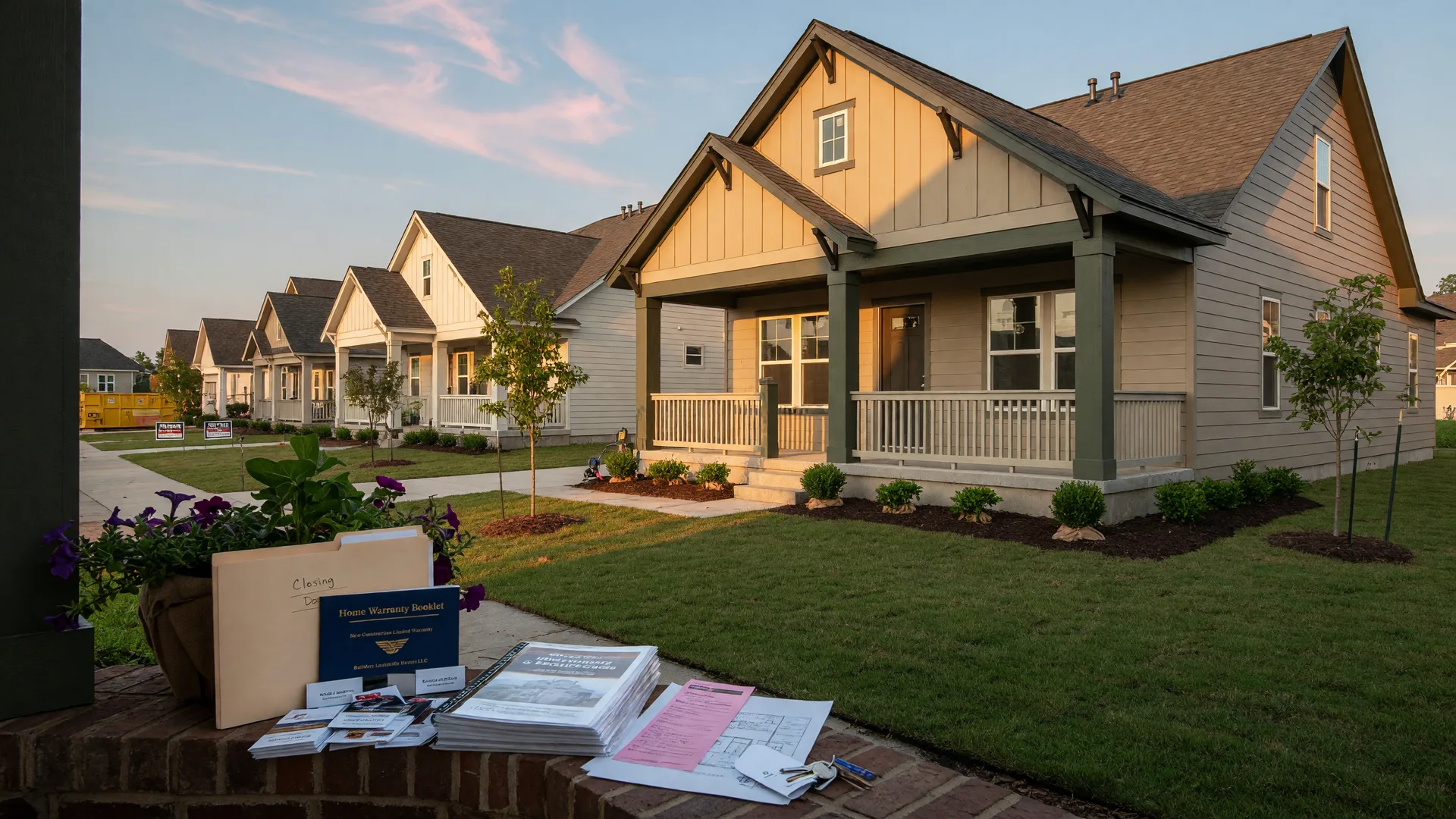

Understanding Builder Contracts in Louisville
Quick Answer
A builder contract isn't the same thing as a resale purchase contract, and treating it like one is where most buyers get into trouble. It's usually longer, more one-sided toward the builder, and full of terms — house plans, specifications, allowances, change orders, completion timelines — that determine what you actually get for your money and what it actually costs. You need to know what to look for, and what evidence to ask for before you rely on anything you were told verbally.
What You'll Learn
- Why a builder contract is structured differently than a resale contract
- The terms that matter most: house plans, specifications, allowances, change orders, and completion timelines
- How to apply the Evidence Test to a builder contract before you sign
- What questions to ask your builder — and why the right time to bring in your own representation is before you sign, not after
Tim's Take
I spent years on the other side of this table. I wrote builder contracts, not just reviewed them, and I can tell you plainly: a contract is where your builder's actual obligations live — not the model home, not the sales conversation, not what a friendly superintendent told you during a walkthrough. If it isn't in the contract, the attached plans, or the specifications, it usually isn't binding. I've seen buyers assume a verbal promise about a feature or a finish would just happen, and then be surprised when it didn't. That's not usually bad faith — it's usually a contract that was never actually read closely.
Why the Common Assumption Is Wrong
Most buyers assume a builder contract works roughly like a resale contract — a document that describes the house, a price, and a closing date. In practice, a new construction contract is doing something different: it's describing a house that doesn't exist yet, built to a specification and a set of plans that may still change, on a timeline that depends on more variables than a completed home ever will. That difference is exactly why the details matter more here, not less.
The Terms That Actually Matter
House Plans
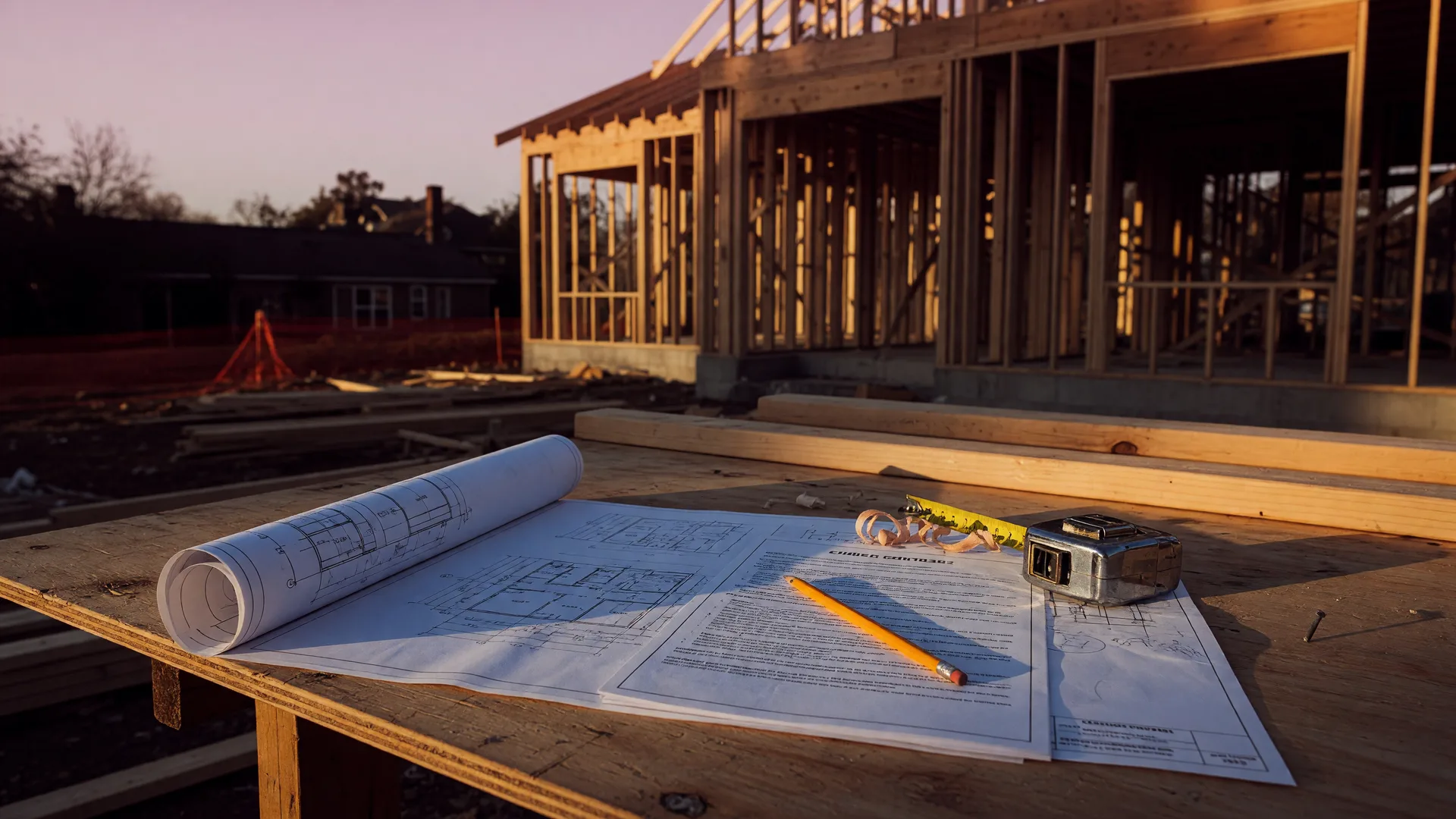
The house plans — the actual architectural drawings — may be incorporated into the contract by reference or included as an attached exhibit. This is easy to overlook, but it's one of the most important documents in the whole package: it's where square footage, room layout, ceiling heights, window placement, and dimensions may be defined. Make sure the plans associated with your contract are the final, current version — not an earlier draft — and that any layout changes discussed along the way are reflected in the version you're signing.
Specifications and the Spec Sheet
The spec sheet — sometimes an exhibit, sometimes a separate document referenced in the contract — is where the materials, brands, and finishes are defined. If something was promised but isn't on the spec sheet, ask for it to be added in writing before you sign. I always tell buyers: the plans and spec sheet together are the contract for the house you're actually going to get.
Allowances
Many builder contracts include allowances — a set dollar amount budgeted for categories like flooring, lighting, or countertops, with the buyer responsible for anything over that amount. Allowances aren't a problem by themselves, but an unrealistically low allowance can turn into a large, unexpected cost later. Don't just ask what the allowance covers — go to the store, pick out the actual products you like, and check the real price against the allowance amount before you sign. A number on paper only means something once you've tested it against something you'd actually choose.
Change Orders
Almost every build involves at least one change order — a documented, signed modification to the original scope, typically with its own cost and, sometimes, its own timeline impact. Two things matter here. First, make sure every change, no matter how small it feels in the moment, is documented and signed rather than agreed to verbally on-site. Second — and this catches people off guard — understand how change orders are paid for. Some builders require payment in full at the time the change order is signed, out of pocket, rather than adding the cost to the total project price to be financed with the rest of the build. That's a real difference in how much cash you need available during construction, and it's worth asking about before you're mid-build and facing a change order you weren't prepared to pay for immediately.
Completion Timelines
Builder contracts may provide considerably more flexibility around completion dates than buyers expect. Weather, material availability, permitting, inspections, labor availability, and other construction variables can affect the schedule, so read carefully what the specific contract says about estimated completion and delays. Ask specifically what happens if the completion date moves: what's the notice process, and what, if any, protections does the contract provide if the delay becomes extended?
Warranty Terms
New construction usually comes with a structured builder warranty, often layered — shorter coverage on workmanship items, longer on major systems and structural elements. Understand what's covered, for how long, and what the process looks like if something needs to be addressed after you move in. (We'll cover this in more depth in a future article comparing builder warranties to standard home warranties.)
Applying the Evidence Test to a Builder Contract
Before you sign anything, it's worth applying the same principle I use throughout the buying and selling process: ask for the evidence behind any claim, rather than relying on the claim alone. In a builder contract, that means:
- If a feature or layout was promised, is it reflected in the actual plans attached to the contract — not just discussed?
- If an allowance seems reasonable, has it actually been tested against real product pricing you picked out yourself, not just assumed?
- If a completion date was given, is it documented as an estimate or a commitment, and what does the contract say happens if it moves?
- If a change order comes up, is it clear — in writing — how and when it gets paid for?
A verbal answer isn't evidence. A line item in the contract, the plans, or the spec sheet is.
Frequently Asked Questions
Can I negotiate a builder contract, or is it take-it-or-leave-it?
It depends on the builder and how custom the build is. Production builders working from standard plans typically have less room to negotiate contract terms than a custom builder. Either way, it's worth asking — the worst outcome is usually just "no."
What happens if I want to make a change after signing?
That's what the change order process is for. Make sure it's documented in writing, with any cost or timeline impact spelled out — and confirm upfront whether that cost is due immediately or added to your total project price.
Are the house plans attached to my contract the final version?
They should be. If layout changes were discussed during the sales process, confirm they're reflected in the actual plans exhibit before you sign — not just remembered from a conversation.
Is a builder contract legally binding the same way a resale contract is?
A signed builder contract is generally a binding legal agreement, just as a signed resale purchase contract is. What's different is the structure and the number of construction-specific provisions it may contain. Your real estate agent can help you understand the transaction mechanics and identify terms or questions worth examining, but if you need legal advice about what a provision means or how it affects your rights or obligations, that's a question for an attorney.
Bottom Line
A builder contract rewards buyers who read closely and ask questions before signing, not after. The plans, specifications, allowances, change order terms, and completion timeline are where the real agreement lives — not the sales conversation. When in doubt, ask for it in writing, and apply the same evidence-based thinking to your builder contract that you'd apply to any other major decision in the process.
Related reading: Construction Loans Explained walks through how construction financing works, including draw schedules and builder approval, so you know what to ask your lender. And if you're weighing whether a custom builder or a production builder fits your priorities, Custom vs. Production Builders in Louisville compares the real differences in cost, timeline, and control. When you're ready to pick through the options sheet,Which Builder Upgrades Are Actually Worth Paying For? sorts which upgrades are worth the money at the builder's table,and which are better left for later. And if you're wondering whether you need your own agent to navigate a builder contract at all, Can I Use My Own REALTOR® When Buying New Construction? explains why your own representation matters throughout the build.
This is exactly the kind of detail that makes having your own representation valuable before you sign, not after. If you're planning to build in Louisville and haven't engaged your own agent yet, I can help you evaluate the plans, specifications, allowances, change-order process, and the transaction terms from a buyer's perspective.
If you'd like to talk about having me represent you before you sign anything, call 502-429-3866.
— Tim
About Tim Hollinden
Tim Hollinden is a former home builder and Broker Associate with The Hollinden Team at eXp Realty. For more than 24 years, he has completed over 1,650 real estate transactions throughout Greater Louisville by combining builder knowledge with practical, evidence-based real estate advice.